



Increased sports funding from a lottery in the Cayman Islands could be a ‘perfect’ way to help more of the nation’s athletes achieve lasting international success, according to past and present local Olympians.
A three-pronged referendum on topics including whether to start a government-run national lottery will be put to voters heading to the polls in the general election on 30 April.
Revealing the move last year, Tourism Minister Kenneth Bryan said, in addition to helping quell interest in illegal gambling, the opportunity to increase revenues to invest in sport was among the “most compelling arguments” in support of Cayman creating a national lottery.
The idea has already drawn support from some of Cayman’s greatest athletes, as well as local sports associations – though there were near-unanimous calls from all parties for funding streams to be revised regardless of the outcome of the lottery referendum.
“I think this would be a step in the right direction,” said three-time Olympian Kareem Streete-Thompson. “Anything would be better than the system we have now.”
Streete-Thompson, who competed on sport’s biggest stage in both the long jump and 100-metre sprint events and is now an associate athletics head coach at the University of Texas San Antonio, earned sponsorship deals – including from Nike – that helped him to pursue a professional career after graduating from Rice University in the mid-1990s.
But the now-52-year-old said it became a struggle to make ends meet towards the latter stages of his career, and that the longevity he achieved also took “a lot of luck”.
“I had to think about other sources of income, so I was able to negotiate the first athlete ambassador contract – through the (now inactive) Elite Athlete Programme – with the Cayman Islands government,” he told the Compass.
“While that ended up being adequate supplementation for a while, towards the end it became more of a struggle because the government divided that compensation pot between more athletes as Cydonie Mothersill and the Fraser brothers and so on came along. That made it harder to maintain what I had been doing; for example, I was unable to compete on the circuit as regularly.”
Disputes over whether Cayman’s athletes receive sufficient funding have grown in the years since Streete-Thompson’s retirement.
As recently as 2023, javelin record holder Alex Pascal cited a lack of adequate financial support as the primary reason for his retirement.
The same year, revelations that the government was sponsoring UK sports teams sparked outrage among underfunded local athletes and sports teams, while the Elite Athlete Programme was suspended, with former Sports Minister Bernie Bush saying it should be altered to avoid sportspeople “collecting money whether they worked hard or not”.
Bush pledged changes, including health insurance plans and lump-sum incentive-based payments, but no clear timeline was placed on the overhaul, and the programme remains inactive two years after the commission tasked with revamping it was formed.
The Department of Sports did not reply to a Compass request for comment.

Nearly a decade earlier, three-time Olympic swimmer Shaune Fraser opted out of the programme, questioning why the funding he received from it had declined despite improvements in his international standing.
Fraser, now 37, said at the time that the scheme failed to provide adequate financial backing for athletes to meet the “unique commitment to training” required to compete at the highest level, such as residing in the United States permanently to train fulltime with a top head coach.
His brother, fellow three-time Olympic swimmer Brett, recently told the Compass that more funding could “extend careers” by putting Cayman’s athletes closer to a level playing field with their international competitors.
The 35-year-old said the programme, which he himself withdrew from after the London 2012 Olympics, “was adequate to cover basic training expenses”, but that the government must “realise that if you’re able to compete with the best in the world – the USA, Canada, South Africa, Australia, wherever – then the level of care and compensation those athletes can get needs to be commensurate with Caymanian athletes”.
“A salary-type amount and then additional prize money for doing certain things, like winning gold, records … even just medalling for Cayman, is a feat,” the younger Fraser said.
“I would hope that it wouldn’t necessarily have to come from a lottery; the government should have this already included in their outlook on where they want sports to go.”
He added, “I would like to see it be in place just as something the sports ministry does, rather than having to create a special funding stream for athletes. We’ve proven that there’s world-class talent there, and it should continue to be recognised and developed with any younger athletes who can potentially rise to the world stage.”
The Cayman Islands Olympic Committee declined to comment on past, present or future funding plans – with or without a hypothetical national lottery – for Cayman’s athletes when approached by the Compass, as did the Cayman Islands Athletics Association.

Steve Broadbelt, president of Cayman Aquatics, which received a reported $150,000 both last year and this year, pointed to the worldwide success of lottery-sports partnerships as a model Cayman could do well to follow.
“Globally, most community sports projects are funded by their national lottery,” Broadbelt said. “It works – I have seen many successful sports projects that have brought incredible value to the community, and that would never have happened if it wasn’t for this type of funding.”
Model for success
One country where such a partnership has proven successful for decades is the UK, where the national lottery has funnelled revenue into sports and athletes since 1997.
UK Sport, the national body responsible for strategically investing these funds into the country’s Olympians and Paralympians, said lottery funding has played a “transformational role” in boosting the success of British sport from a “disappointing” 15 medals at Atlanta 1996 to more than 60 at each of the last four Olympic Games, and over 100 medals at every Summer Paralympics since 2000.
In the Olympic cycle culminating in Paris 2024, where 327 British athletes competed across 26 sports, UK Sport invested £315 million, plus an additional £70 million in athlete performance awards, which are paid directly to the country’s most promising athletes to support their full-time pursuit of sporting success. In the years leading up to the Los Angeles 2028 Olympics, this funding is set to top a record £400 million, the BBC reported.
Closer to home, Barbados provides another example of a country whose lottery maintains strong connections to its national sporting endeavours.
Barbados Olympic Association general manager Glyne Clarke told the Compass that a cut of the lottery’s annual revenue – reportedly “$5-6 million” Barbadian dollars (about CI$2.1-2.5 million) each year – is siphoned into the country’s national sports federations in the form of grants and a tiered athletes funding programme.
The latter divides athletes into four categories, “elite, high performance, developing and emerging”, with different levels of funding allocated accordingly to assist with costs, including training, strength and conditioning, nutrition and psychological coaching, Clarke said.
The Barbados Olympic Association declined to disclose the value of each tier’s per-athlete stipend, but one Bajan athlete, in receipt of funding they believed to be on the second-lowest rung, told the Compass they were awarded about $7,500 Barbadian (CI$3,000) per year.
Barbados, a country of roughly 280,000 people, sent its smallest contingent in over two decades to Paris 2024 with a four-strong team of athletes – the same number as Cayman – and produced a finalist in 400m runner Sada Williams. Like Cayman, it also sent nine officials, a discrepancy which didn’t sit well with some in Barbados’ sporting ranks.
“They were complaining that they barely had money to send the officials, and they snubbed a lot of athletes who should have gotten selected,” one Bajan national team athlete told the Compass.
“When people get money that they didn’t earn to spend as they please, they don’t always allocate it efficiently … I’m not necessarily saying this is what happens in Barbados, but it’s possible.”
Who controls the purse strings?
How exactly such funding may be used and allocated is a question also posed by several of Cayman’s own Olympians.
“Even if this lottery is set up, there’s still the question of the person controlling the purse strings,” said Streete-Thompson. “Do they – is there anyone that could – understand with an athlete who can represent Cayman on the world stage, bring more eyes and notoriety to the islands, what that could be worth?”
He continued, “What is Jordan Crooks worth to Cayman, for example, as an ambassador? Is there any thought to when he’s finishing his athletic career, what he brings from a tourism standpoint, marketing … what is that dollar amount?
“If something like this is going to be successful, you have to think about real numbers. What does it cost just to live, and then to get therapy, supplementation, coaching, facilities, travel … all of that has to be taken into account. If you’re going to do it right, get a team around you with proper doctors, coaching, sports psychologists … that’s going to cost a lot of money. It adds up really quickly.”

Kemar Hyman, another three-time Olympian and Cayman’s current 100m sprint record holder, said a national lottery could be a “perfect” way to create a new, tiered athlete-funding system to replace the Elite Athlete Programme, which, he said, “should have never been off the table”.
“The country can afford it, so let’s talk about it, and it will only get better from here,” he said. “You have to nurture these athletes.
“If they want us to win medals and be on the highest level, there are costs to achieve that. It’s up to the athlete how they use that money, to use it in the right way, to keep maintaining the standard to keep the yearly contract.”
Hyman added, “They can implement the community side of things more, have athletes come back and inspire the next generation in Cayman.
“It shouldn’t be something [the government] is scared of – I can’t find one thing that would be a disadvantage to the country by doing it. This can encourage people to see being a professional athlete from Cayman is possible.”
What do today’s stars think?
There is also support for increased athlete funding across the sporting spectrum of Cayman’s current crop of Olympians.
Fresh from his record-breaking final NCAA meet, world beater Jordan Crooks – a senior at the University of Tennessee – said extra funding would “definitely benefit future athletes looking to pursue their sport at or past the collegiate level”.
Davontè Howell, who competed in the 100m at last summer’s Olympic Games and also currently trains at the University of Tennessee, agreed that revenue from a national lottery “would definitely help” him and other up-and-coming Caymanian athletes.
“I have the benefit of having world-class facilities to train and prepare for meets without having to spend money. However, not all athletes will have that benefit, and for them that may mean giving up on their goals of representing their country,” said the 19-year-old sprinter, who receives scholarship backing from the Cayman Islands government and is currently in search of sponsorship deals to cover remaining costs.
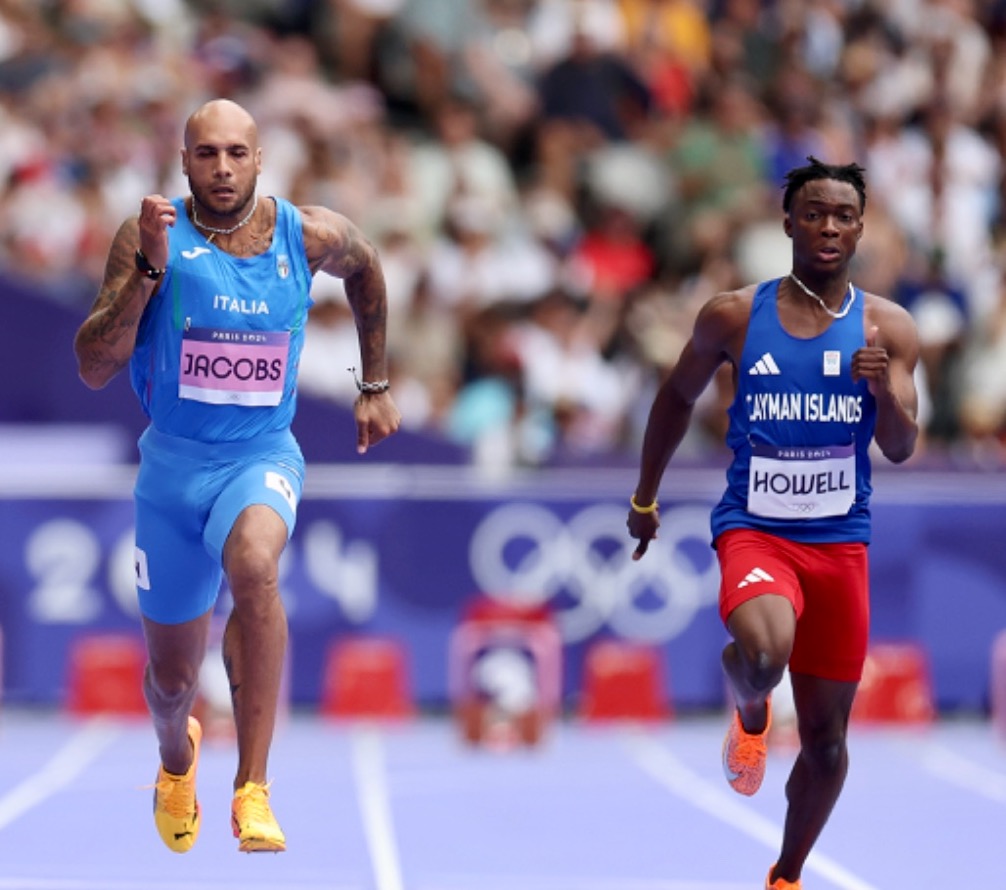
“The funding that a national lottery could provide would benefit me and other athletes by assisting Cayman to have first-class facilities and hire first-class coaches, so that we can train at home if we wanted to, or even provide funding for us to be part of elite training programmes overseas.”
Howell added, “It would also allow us to travel to some other competitions, local or abroad. When I am representing my country, then all expenses are paid for, but sometimes you also need that mental support – be it from your parents, homegrown coach or overseas coach – that current funding doesn’t cater for, and so this kind of funding could help with this.”
Charlotte Webster, who sailed for Cayman last summer, said her preparations for Paris were funded through a combination of borrowing, personal savings, donations from supporters, small deals from commercial sponsors and a grant from Cayman’s Olympic Committee – although the latter was only awarded after she had qualified for the Games, seven months prior to her hoisting the flag alongside Crooks in the opening ceremony.
“Funding would make a huge difference to any campaign,” she told the Compass.
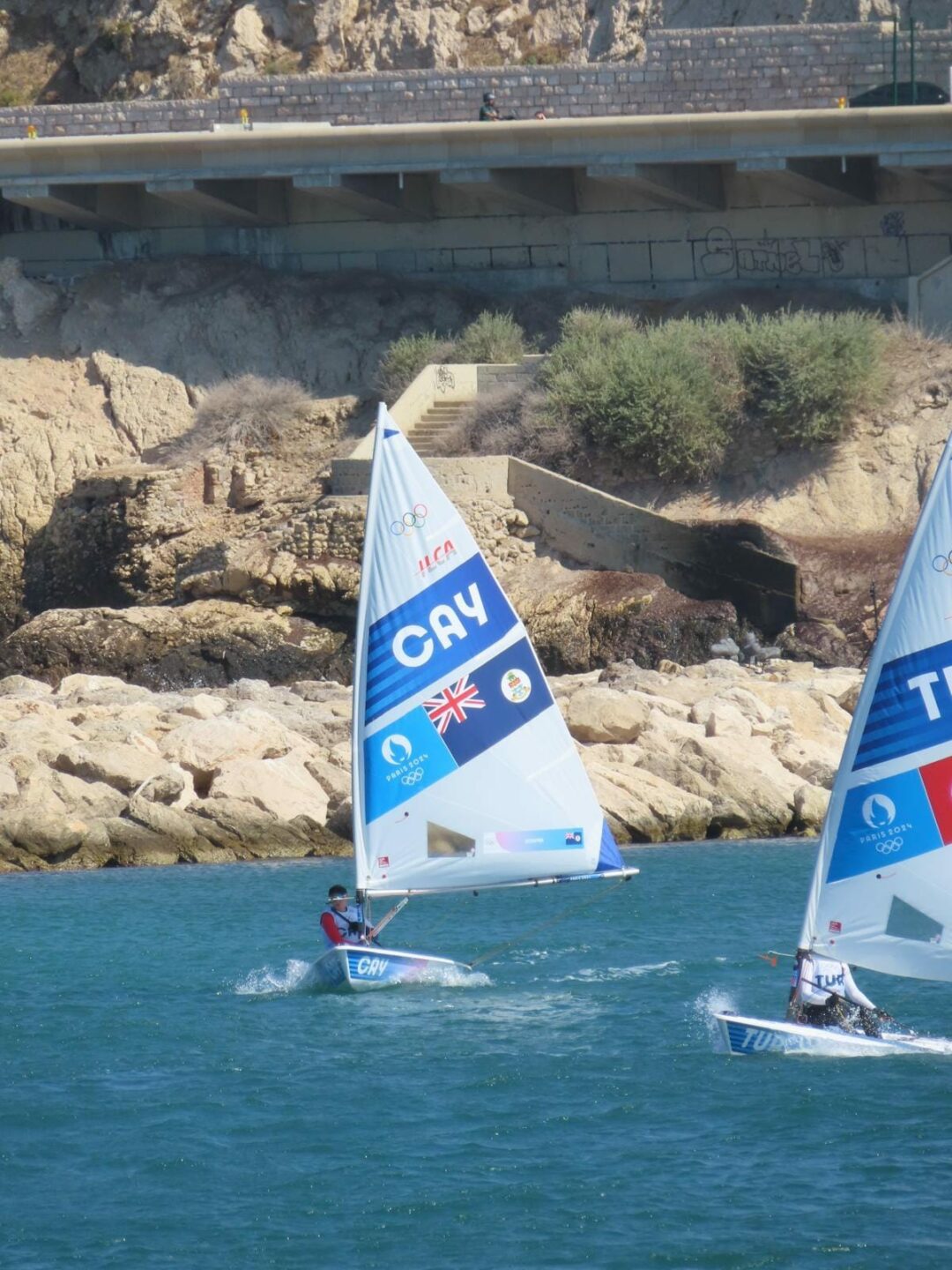
“In my build-up to the Olympics, I competed in over 20 events around the world as part of my preparation and qualifying journey, while studying at university. The best-funded national sailing teams can train their sailors fulltime, just like a job, so the athletes can focus exclusively on their sport.”
She added, “I can’t comment on the question of a national lottery in Cayman, but what I have seen is how the British sailing team has benefited enormously from the UK national lottery funding, which has helped them maintain their status as the most successful Olympic sailing team of all time.”
Swimmer Lara Arvier, née Butler, who represented Cayman at the 2016 Olympics, also spoke of the importance of financial support.
“Access to resources is often one of the biggest barriers for young athletes trying to pursue their dreams,” she said. “Whether it’s covering travel for overseas competitions, accessing quality coaching, gear, or simply having the right training facilities, it all adds up – and many families just can’t afford it on their own.”
Recalling her sporting journey, she said, “When I was coming up through the ranks, we relied heavily on the support of my family, [and] some generous local sponsors. Looking back, having a consistent, structured source of funding could’ve made things a bit less stressful and allowed more focus on training and performance.”

Though there is already much cause for celebration around Cayman’s sporting achievements, there exists plenty of potential for even greater success if the nation’s athletes are supported similarly to their peers around the world.
“What should be recognised and celebrated is that the small islands of Cayman have produced multiple world-class athletes – that is undeniable,” Streete-Thompson concluded. “If there’s more of an effort to reward these athletes and make sure they’re taken care of, you’ll have less athletes being a flash in the pan, having their moment and disappearing.
“If there’s careful thought and planning, even just looking at it from one Olympic cycle to another, that’s what’s needed to make sure this sustains itself. That trickles down to the next young man or woman who is able to look at that standard being set and say, ‘I want to beat that standard.’ You’ll have more and more athletes striving to be there.”