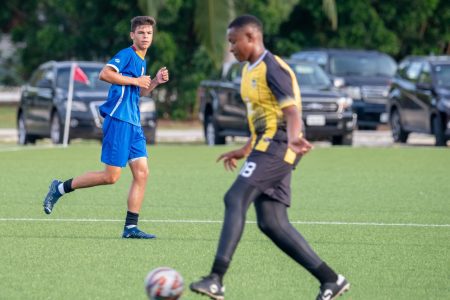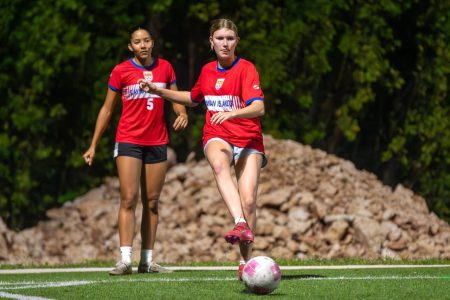


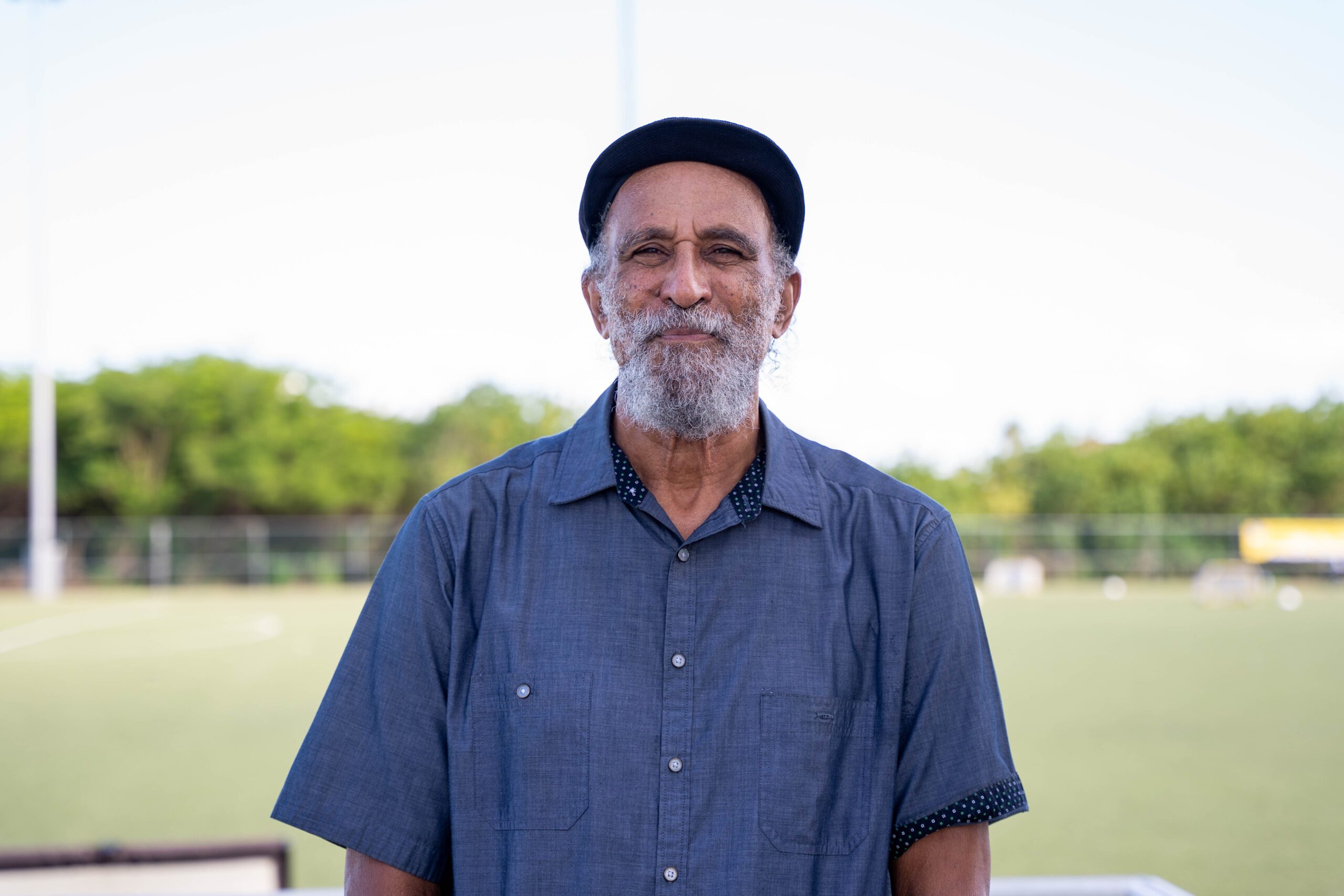
Since its founding in 1998, Future Sports Club has been a sanctuary and foundation for many young people in West Bay, and for over two decades, Roy ‘Huta’ Ebanks has been an instrumental part of the football club, steering it with a philosophy that prioritises the person over the player.
Now, a significant transition is under way, with Ebanks guiding two of his longstanding players, Colby Seymour and Kameron D’Hue, who have stepped up as player-coaches, to lead the next generation.
The transition, which began in August during pre-season, marks a full-circle moment for the club.
Huta’s confidence in Seymour and D’Hue
Huta’s decision to have Seymour, head player-coach, and D’Hue, assistant player-coach, transition into these roles was made with total confidence.
“[Both young men] are loyal to the philosophy of Future SC, humble, possess great leadership qualities, have great personalities and are relatable to all generations,” Ebanks says.
Having watched them grow up in the programme, he knows they understand the club’s values. “I cannot decide to pass it on to people that only look at the football factor without understanding the human being factor of the game,” he says.
Ebanks hopes for both player-coaches to continue growing the programme by attracting young players, empowering themselves by obtaining more coaching qualifications and exposure, as well as eventually branching out into the schools to continue coaching in these spaces.
In the event that both Seymour and D’Hue are on the field at the same time, Ebanks says he will “assist on the bench … as the technical director”.
An ‘indescribable’ feeling for Seymour
Seymour, 31, has been with Future SC since he was 14 years old. For him, taking the reins of the only local club he has ever represented is one he describes as “very fulfilling” and giving him “immense pride”.
“We’ve prided ourselves on building not just young Caymanians as footballers, but as individuals as well – so being able to give back to the community that I’ve known and loved all my life is indescribable,” Seymour says.
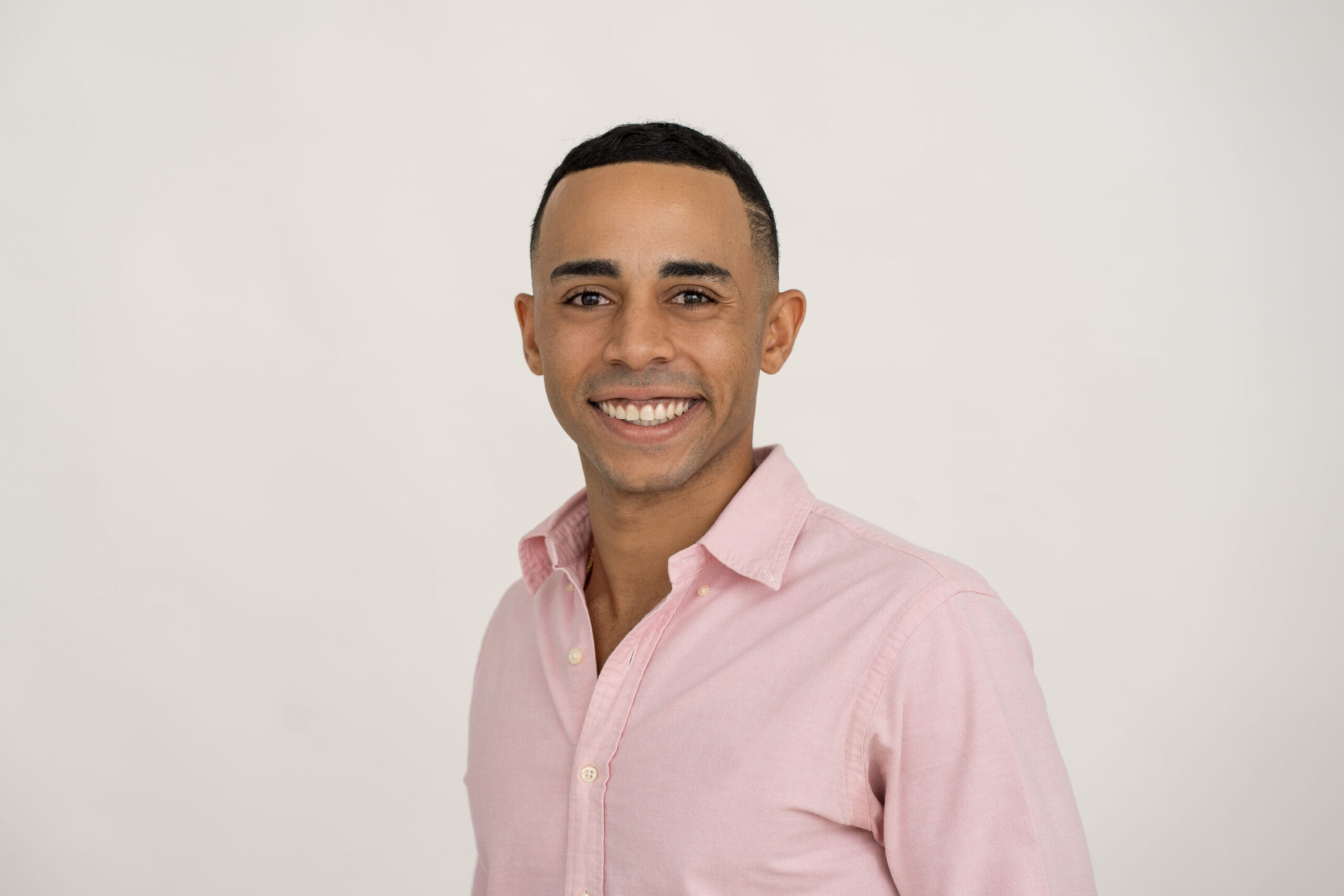
Seymour, who refers to Ebanks as “a second father to me”, acknowledges his new role, saying, “They are big shoes to fill, but it’s a challenge I’m wholeheartedly looking forward to.”
He adds, “I hope I can establish myself not just as a good coach, but as a good role model who leads by example and help these guys plant their feet firmly on the right path that God has in store for them.”
While the club is in “the phase of rebuilding”, Seymour’s vision remains on the goals and actions he intends to take.
He says he wants to “continue improving on the building blocks [Coach Huta] has set in place”, while creating a team that has “an identity that is consistent with being competitive and hard working”.
Seymour, while studying in the United Kingdom for his undergraduate degree in Sports Business Management, played for football clubs in London, such as Lewisham Borough, AFC Croydon Athletic and Bari FC.
He said playing with these clubs provided him the opportunity to “work with coaches from various footballing projects” like Chelsea FC, Crystal Palace and Tottenham.
‘A match made in heaven’
When he first joined Future SC, Seymour says he felt “a special connection” with the club.
Diving a little deeper into the club’s values, he described the three elements of the club’s badge – the Bible, a graduation cap and a football.
“Coach Huta always used to stress the importance of God in our lives, as well as explaining to us how education was non-negotiable if we wanted to create a better life for ourselves, and football was obviously the vehicle that he used to deliver this message,” he says.
Reflecting on this symbolism, he adds, “I’d never had my soul resonate with an institution like that before, so it really was like a match made in heaven. As a coach now, I feel that it’s my duty to ensure that the same ethos and philosophy is adhered to by everyone within the organisation.”
Seymour acknowledges the “blurred lines” that can present themselves when playing dual roles, but, for him, open and honest communication are ways he aims to overcome the potential challenge.
“I plan my sessions with a goal behind it and once I finish, I like to dissect with the players and break everything down, so that we all are able to understand our common goal,” he says.

Seymour serves in the role full-time, splitting responsibilities with D’Hue – who he refers to as “co-coach” – a teammate he has played with for more than 15 years.
“We have very similar ways that we view the game and share a deep-seeded love for this club, so I couldn’t be happier aligning myself with someone who shares a similar footballing background,” Seymour says.
He says having a like-minded co-coach will be extremely helpful “so my responsibilities are shared in a sense”.
During this transition, Seymour says, “Coach Huta has been there every step of the way”, adding, “From the time I’ve started as a player right up until our last training session, he has always been very open and helps me see things from a different perspective, while also offering his services and assisting with training when needed.”
Seymour credits Ebanks for providing “all the tools to be a successful player” and continuing that support throughout his transition into coaching.
As the club moves forward, the vision extends beyond the men’s senior team for Seymour, as he states, “In the near future, I’d like to see our club re-establish its women’s programme. I think that’s something that is easily forgotten about in our community, and inclusivity is something that Future has always promoted.”