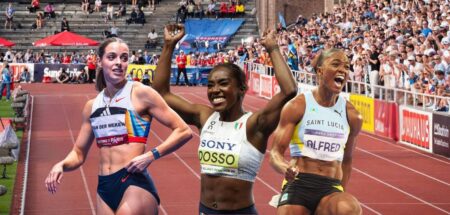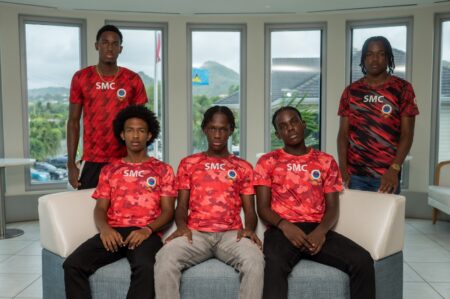


Sport in Saint Lucia has experienced a significant shift in focus and development over the past few decades. Access to funding, improved infrastructure and greater technical support for athletes have transformed ordinary competitors such as Julien Alfred, Ackeem Auguste, Daren Sammy and Vino Barclett, into international stars.
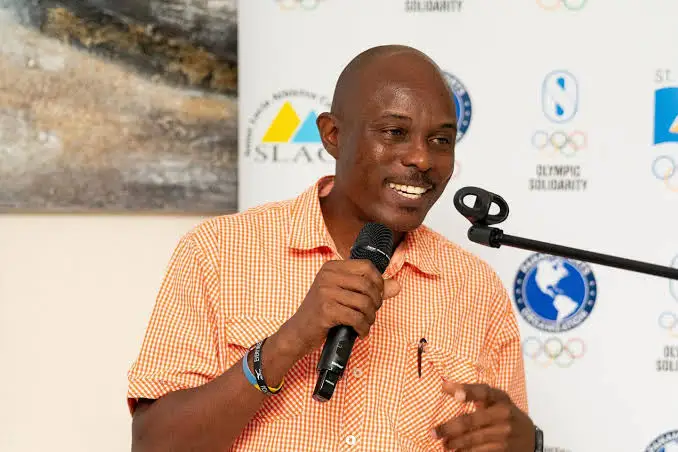
The key differences between the sporting landscape of the past and the one athletes enjoy today are best highlighted through the experiences of Zepherinus “Knockay” Joseph. The Mon Repos native is widely regarded as the island’s greatest long-distance runner. Joseph represented Fair Helen at the 2004 Olympic Games in Athens, and he still holds national records across distances from 1500m to the marathon. Beyond athletics, Joseph has served the nation as a police officer for many years.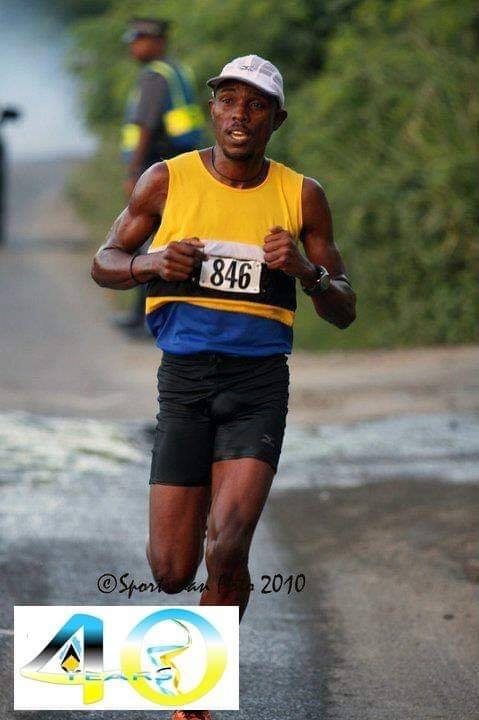
In an exclusive interview, Joseph revealed that financial assistance was his biggest challenge when competing nationally and internationally, particularly from local sports governing bodies.
“I can clearly remember that in 2005, after competing at the 2004 Athens Olympics, I applied for an Olympic Solidarity scholarship. The application was sent to the National Olympic Committee but [they] never applied for the scholarship on my behalf,” he lamented. “The General Secretary back then even questioned me at a meeting about an email I sent to the Olympic Solidarity asking about the standard one must attain to receive the scholarship. I was reliably informed that there wasn’t a standard per say but one must show potential. Imagine being the best long distance runner in the English speaking Caribbean at that time but being treated like that in your homeland.”
St. Lucia Times reached out to the SLOC for comment regarding the scholarship procedures. In an email response, SLOC President Alfred Emmanuel declined to comment directly on past events, stating, “We are in 2026 and my focus is dealing with the present.”
Despite these challenges, Joseph is pleased that the mood regarding sports and sports development has shifted. He notes that opportunities, both financial and otherwise, are now being presented to the next generation of athletes, though he observes a decline in interest among young people.
“I can safely say that things have improved and there are much more opportunities now but less athletes. It is much easier for an athlete to receive a scholarship to study abroad. Case in point, we now have junior athletes attending school in Jamaica, something that was unheard of during my time,” he said.
Joseph remains hopeful for the future of athletic development, a future in which he intends to play a part. He believes, however, that proper technical support must strengthen this progress.
“I envision a few more world titles coming our way,” he said. “We just need to put things in place for our athletes ensuring that they have the right environment around them. As for me, I’m willing to assist any athlete but if I have to be the one to beg them to train, it definitely won’t work.”
He also offered advice to athletes aspiring to showcase their talent on the world stage.
“They need to be consistent with their training. Always be willing to listen and never allow the little victories we have on home soil to get to their heads.”