



The sport can’t afford to dismiss new ideas, but there can’t be offshoots without the kind of showpiece platform provided by events like the one about to unfold in Tokyo.
A recurring theme around the sport of athletics at the moment is its plan for survival. It might be, as Japan Athletics Federation president Yuko Arimori called it, “the mother of sports”, but outside of the Olympics it is abundantly clear there are struggles to make an impact beyond those for whom running, jumping and throwing already holds a special place in their hearts.
Sydney McLaughlin-Levrone – a serial Olympic champion, world record-holder and one of the finest exponents of her art in history – recently admitted that, if she is stopped in the street, the conversation “normally starts out with somebody being like: ‘You look familiar. Do you do a sport? You look like this girl. I can’t remember her name’.”
“Athletics can’t keep kidding itself,” wrote Sean Ingle in a recent column for The Guardian, in which he also proposed a very coherent five-point plan as to how it might be possible to start changing the landscape. He is not alone in having ideas about the way forward and the global governing body isn’t sitting on its hands or sticking its fingers in its ears.
On Thursday evening in downtown Tokyo, there was a media launch to celebrate the one year to go landmark of the Ultimate Championships, World Athletics’ brainchild and a new three-day event designed not just to satisfy the appetite of the current audience but attract a new one.
The pitfalls in trying to pull off that trick have been brought into sharp focus this year, of course, by the car crash that has been Grand Slam Track – a project that has seriously damaged Michael Johnson’s reputation and left a number of the world’s biggest stars still waiting for their money.

“It’s great to have ideas and it’s great to come in and try to disrupt the market but if you don’t execute properly you leave athletes stranded in events that don’t really have any purpose,” said Sebastian Coe, speaking on the eve of the 20th World Championships, which get underway in the Japanese capital on Saturday morning (September 13). “We have a great platform to build on.”
The World Athletics President is now halfway through the final term of his tenure. He has two years left in the hot seat and a long to-do list.
“I’m 10 years into this,” he added. “The first four were [about] preventing the ship from capsizing, the next four were about putting in all the things that allowed us to have the platform to keep talking about and delivering a different type of world championships.
“For the remaining two years, I’m in a hurry. We’re going to drive a lot of these things through and not everybody is going to be happy with everything that we do but I don’t have to worry about that too much longer. There’s a liberation and a freedom to the next two years.”
Indeed, at the World Athletics Convention earlier this week, the keynote speaker was Bob Weis, former President of Walt Disney Imagineering, who spoke of his belief that if you can imagine it then you can do it. The changes will keep coming.
Coe knows they can’t be built on sand, though, and there is no foundation from which to develop without events such as the world championships.
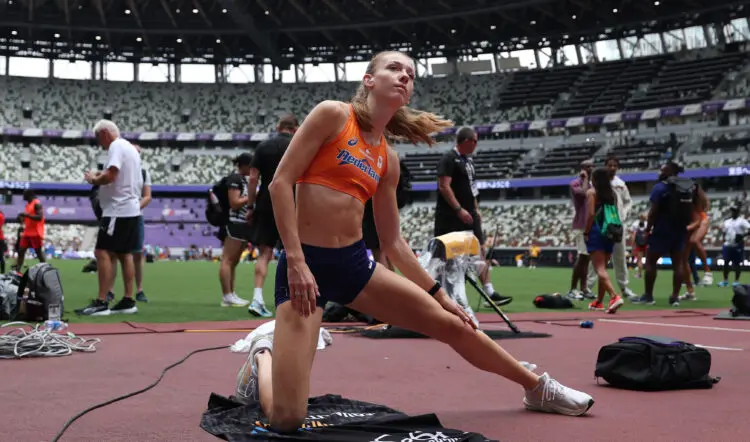
Like Weis, those who will be competing over the next 10 days will have spent plenty of time doing some imagining of their own – more specifically about what they might be able to achieve in Tokyo’s magnificent national stadium. Unlike the Covid-afflicted 2021 Olympics, they won’t be left to imagine the presence of spectators, either. Not every session is sold out, but there will be moments that unfold before a capacity crowd.
Japan in itself is a good test case when it comes to the challenges facing athletics. This is a country obsessed with the marathon and distance road running but that interest does not necessarily transfer into track and field. This is a brilliant opportunity for the stars of today to create the moments that could encourage potential successors. And have an impact.
There’s a reason why one of the changes implemented by Coe and his team has been to re-shape the athletics calendar so that its biggest championships become the final act of the season. The major events are special. They create the basis from which everything else can grow and you certainly can’t nourish the new offshoots of change without having strong roots in the first place.
This past year has seen the emergence of a number of highly impressive young talents, many of whom will be getting their first taste of a senior global championships. They are about to find out why such occasions are an entirely different proposition from anything they will have faced in the past.
The sensational 17-year-old sprinter Gout Gout has the potential to be truly extraordinary but even reaching a world final itself this time around would represent a remarkable feat, given all the extra elements to be negotiated at a championships – aside from the intensity and ability levels going up a few notches. As reigning men’s 1500m champion Josh Kerr put it, winning medals “is a skill”.
The skills of the best are about to be put on show in what Coe referred to as “the largest global sporting event of the year by some distance” and it’s certainly the biggest sporting showcase in Japan since the Olympics.
So, yes, athletics does need to look at itself and present itself in new ways, to open fresh discussion, avenues and opportunities. It can’t afford not to.
But, amidst all of the talk about reinventing the wheel, let’s not forget that nothing creates the kind of heat that a championships does. There is a depth, a weight and a substance to occasions such as this which can’t be ignored, either.
Listen to the World Championships preview episode of the Athletics Weekly Podcast here


