




– Advertisement –
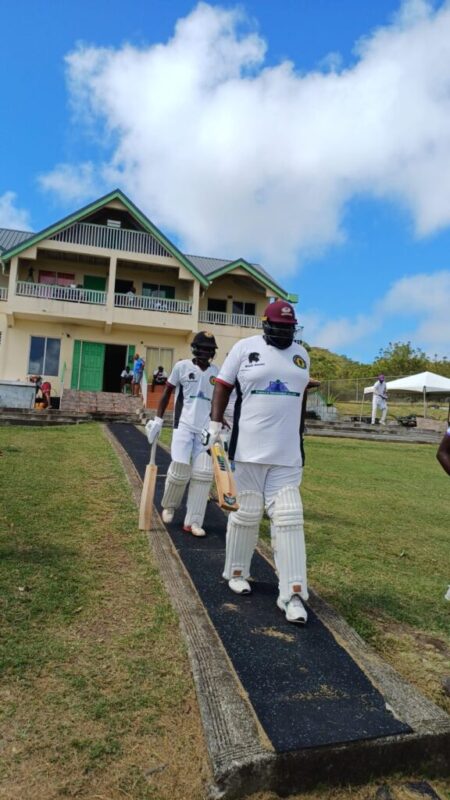
With June being Men’s Mental Health Month, we focus on the Barthley Family with its patriarch at the helm, Zorol Barthley, who has certainly impacted the lives of his three sons. The former West Indies Under-19 captain who played alongside future legends like Carl Hooper and Jimmy Adams, the family is creating a sporting dynasty built on balance, independence, and unwavering support.
Speaking to Observer Media, Zorol was adamant that sports and education were never competing forces in his household. “Sport was always in the house, whether on TV or playing. And it was fully encouraged. It was never put up as a sports versus education kind of thing,” he explained. This philosophy shaped how all three of his sons—Dario, Dejan, and Dajari—approached their athletic and academic pursuits.

Having experienced the demands of high-level cricket himself, Zorol understood the importance of multitasking and ensuring his children didn’t become “couch potatoes” despite the allure of electronic entertainment. With the younger sons attending Baptist Academy, a school without a strong sporting tradition, Zorol took it upon himself to provide weekend opportunities through clubs and activities from an early age.
Perhaps nowhere is Zorol’s parenting philosophy more evident than in his approach with eldest son Dario, who was an only child for the first ten years of his life. During this period, Zorol implemented a unique strategy that would shape Dario’s character for life.
“I always asked him questions. I always asked, what you don’t like about me? ” So that he developed an independent mindset and just don’t get by for the sake of getting by,” Zorol recalls. This approach included sending young Dario to St Kitts alone to stay with his godfather, Keith Athurton, providing early travel exposure and ensuring “Antigua wasn’t the only mirror he was looking in.”

The result? “Dario has developed a very, very low tolerance for nonsense,” his father states proudly. This independent mindset, cultivated from childhood, has served Dario well throughout his career, even when it meant standing up to people older than him or challenging established norms.
For youngest son Dajari, currently completing his A-Levels in Maths, Business, and BTEC Level 3 Sports Coaching at Bede’s Senior School in East Sussex, his father’s support has been both consistent and constructive. When asked about the support he receives after both good and bad performances, Dajari describes it as “very positive and uplifting”.
“Maybe something that he’d noticed from watching on the side that he could tell me, ‘yeah, maybe you should do this better next time’,” Dajari explains.

What makes this guidance particularly effective is Zorol’s understanding that “everything doesn’t work for everybody,” allowing his sons to experiment and find what works for their individual styles.
Despite having multiple sons involved in sports, Dajari notes that attention from his father has always been fairly distributed, though he admits there was “more so when I was younger” some competition for attention among the brothers.
Zorol’s balanced approach becomes particularly crucial when his sons face challenges or unfair treatment. Drawing from his own experience and the high-profile difficulties faced by Dario in cricket, Zorol emphasizes the importance of objective assessment.
“You have to be balanced in your assessment. You have to be balanced in your encouragement and your criticism,” he explains. As a spectator, he’s learned to control his parental bias, understanding that emotional investment can cloud judgment. “You can’t allow your parental bias to take over. So you always have to be very objective.”
This objectivity extends to how he models behavior for his sons’ future roles as sports parents themselves. He emphasizes the importance of how parents react on the sidelines, whether they agree with decisions or not, and maintaining genuine, unbiased feedback.

The emotional foundation of the Barthley family dynamic is built on regular expressions of love and pride. When asked whether his father regularly tells him he’s loved and that he’s proud of him, Dajari responds with conviction: “Yes, most definitely. Especially in times where maybe I’m not performing as well as I should be in my sports.”
These affirmations come at crucial moments—during struggles, after achievements, and as motivation to reach higher goals. “I think those are the special times when sons need to hear that from their father,” Dajari reflects, highlighting the intentionality behind his father’s emotional support.
The Barthley approach to balancing sports and education is evident in their sons’ academic achievements. Dajun is completing his Bachelor’s in Sports Science with an emphasis on nutrition at West Virginia Wesleyan College, while Dario graduated with a BSc in Sports Management from Baldwin Wallace University in Ohio. This educational foundation provides security and career options beyond pure athletic performance.
When it comes to athletic scholarships and professional pursuits, Zorol maintains his philosophy of guided independence. “You have to allow the children to make their own decisions. You can’t push them into what you want them to do,” he states firmly.

His approach recognizes that parents sometimes want to make life “risk-free” for their children, but he believes that “you have to make errors to learn.” Instead of pushing his sons down his own path, he encourages them to “make their own paths” while providing support and maintaining moral guidance.
While much focus falls on the father-son dynamic, Zorol is careful to acknowledge that their success represents “a team effort,” with their mother, Molvie Barthley, playing an equally crucial “fatherly way from time to time.” This recognition of shared parenting responsibilities adds depth to the family’s approach to raising successful young athletes.
Zorol’s approach, rooted in his own experience as a former West Indies Under-19 captain, proves that the most effective sports parents are those who understand the game, provide unwavering emotional support, and have the wisdom to step back when it’s time for their children to chart their own courses. In the Barthley household, sports and education coexist harmoniously, creating well-rounded individuals prepared for success both on and off the field.
About The Author

– Advertisement –