


By Bob Harig for the Cayman Compass
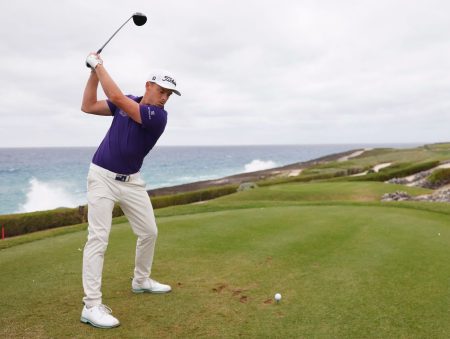
OAKMONT, Pa. – Cayman’s Justin Hastings made another piece of history Friday, making the halfway cut in the US Open.
At six-over-par, Hastings squeezed into the final two days with the same score across two rounds as Masters champion Rory McIlroy. He has already bettered Tommy Fleetwood, Phil Mickelson and defending champion Bryson DeChambeau — all of whom missed the cut.
Bad weather meant some players had yet to finish their second round Friday night. But there were enough in the clubhouse for the cut to be set at seven over par. Hastings joins Aaron Jarvis, who made the cut at The Open Championship in the UK, as one of just two Caymanians to go this deep in a major golf tournament. He is tied for 45th place and the lowest amateur in the field.
Prior to the emergence of these two young golfers, no Caymanian had ever competed at this level.
As Hastings, 21, was describing to a Pittsburgh-area newspaper writer on Friday afternoon that he hails from a country that has just one 18-hole golf course and just 27 holes total, his father could only chuckle.
He’s heard the wonder in voices on plenty of occasions and the questions about how someone could become so proficient at golf despite being from a place where it barely registers.
Justin Hastings played all of his golf growing up at the North Sound 18-hole course, where he has the record of 57, 14 under par. (His next best is 62.) He also practices at the nine-hole Greg Norman-designed Ritz Carlton course.
“What nobody talks about is that he was there every day, all the time, all year, working at this,” said Rich Hastings, Justn’s father, who stood nearby after his son not only became the first player to compete in the US Open from the Cayman Islands, but also the first to make the 36-hole cut.
Although Hastings wasn’t quite sure if he had done enough to make it to the weekend after a second 73 left him at 146, 6 over par, it was quite evident by the difficulty of the course and the ever-high scores at Oakmont Country Club that he would be around for the weekend at the 125th US Open. And that was confirmed later in the afternoon.
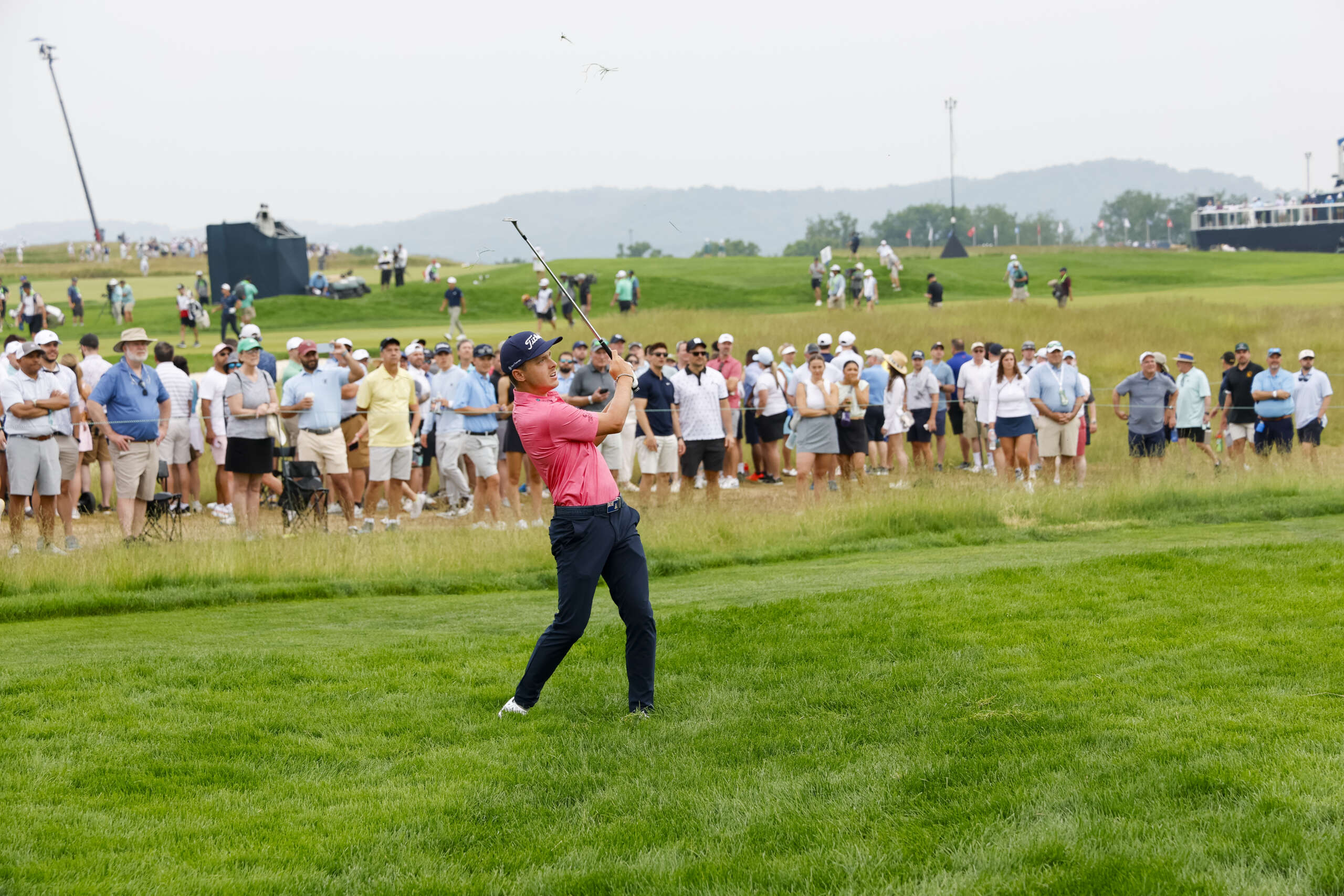
A double bogey-5 at the par-3 eighth hole — his 17th — made things a bit more nerve-racking as he played the final hole, needing a par to assure the weekend. But once it was complete, Hastings could exhale and look forward to two more rounds.
“I think I’ve believed for a little while now that I can kind of play out here,” said Hastings of the pro game that he expects to join sometime next month after The Open Championship.
“So this was just the reassurance of that, I would say is the big thing. I’ve still got a lot of things, a lot of kind of process-based things that I want to improve in the next, hopefully, couple of days and in the future. So I’m going to continue on that.”
Among the areas Hastings wants to work on is his driving accuracy. Playing Oakmont well starts by hitting the ball in the fairway, and Hastings has hit just 13 of 28 fairways so far through two rounds.
That puts a lot of stress on other parts of the game, especially at a place where it is so difficult to hit shots out of the deep rough.
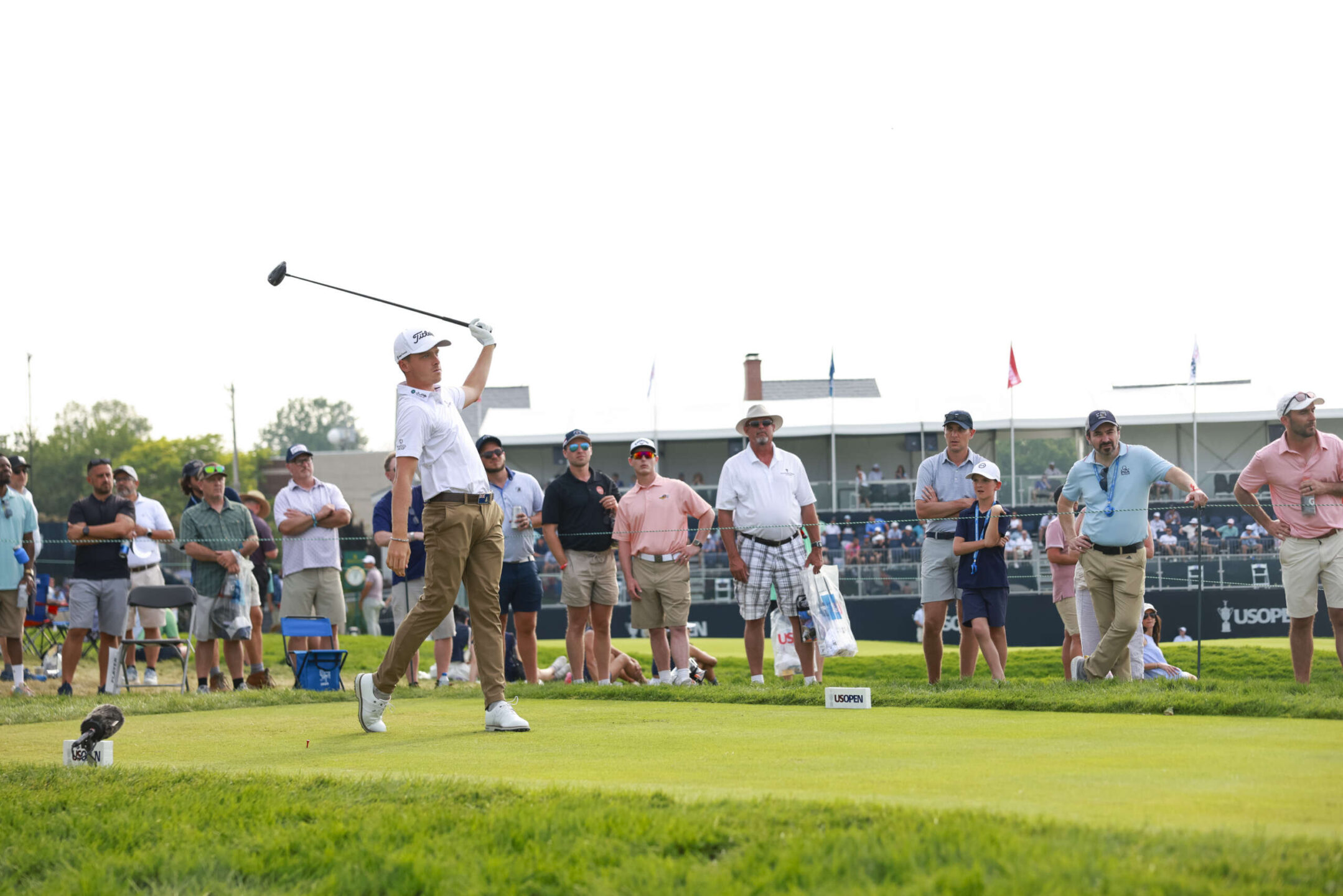
But Hastings did well to minimise the damage. Starting on the 10th hole, he made two bogey and two birdies over the first nine holes, including a 3 on the par-4 18th, exacting a bit of revenge after a tough double bogey 6 there to end his round on Thursday.
Then after a double-bogey 7 at the par-5 fourth hole, Hastings birdied consecutive holes to get back to 4 over par before his double at the eighth. He finished at 146, 6 over, which is very respectable and will put him in the running for low amateur honours.
“A double [bogey] is bad on the scorecard, but you can hit one bad shot, and you get an unlucky bounce and it’s kind of like you’re fighting to make a bogey,” he said.
“That’s how difficult this place can be.”
As the afternoon unfolded, he was 10 shots back of tournament leader J.J. Spaun, who was still on the course. Only five players completed 36 holes under par.
All of it has been a great learning experience.
“You’re out there and you hear the roars every now and then and a couple of times I’ve checked, it’s got to be Scottie (Scheffler) or something like that. But you see them, you see how cool and collected they are and things like that. And I think that’s the biggest thing that I look up to them in that sense. That’s something that I can continue to get a better idea.”