

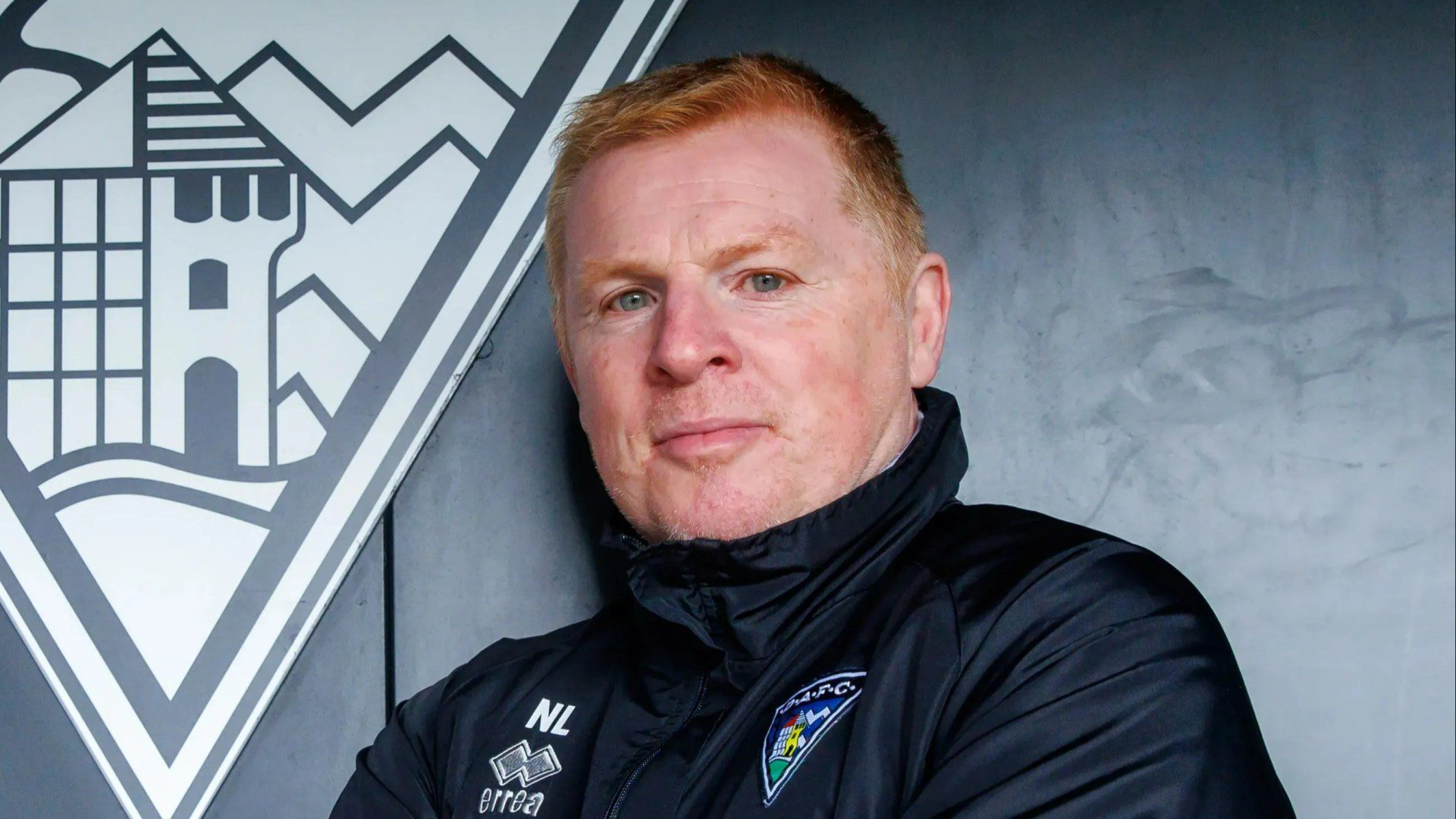
NOT even a bomb or a bullet could persuade Neil Lennon to give up his dream job as Celtic boss.
Not even a savage beating which left him out cold in a Glasgow street could make him walk away from the Hoops, in the fledgling period of his coaching career.
Death threats also couldn’t force Lennon to quit — although although one did immediately end his career as a Northern Ireland star.
In an extraordinary interview for SunSport’s YouTube One-on-One podcast, the Dunfermline gaffer has detailed how he dealt with the shocking episodes when he was in his 30s.
Now 54, Lennon has revealed the extent of protection he needed at his home — with at one point even his granddaughter unwittingly triggering a security response.
As far back as August 2002 he was poised to skipper his national team for the first time in a friendly against Cyprus at Windsor Park.
Read More Football Stories

LEAVE IT OUT
Celtic hero Lennon tells angry fans to lay off Lawwell and ‘genius’ Desmond

FIRM DEALS
Free bets and new customer offers for upcoming Rangers and Celtic fixtures
A death threat, suspected to be from a paramilitary group, was revealed.
After 40 caps, midfield dynamo Lennon soon decided he wouldn’t play again for Northern Ireland.
In May 2004 graffiti was daubed on a road close to his Glasgow home which chillingly stated: ‘You are a dead man Lennon’.
In September 2008 he was walking home in the early hours after a night out in the aftermath of an Old Firm derby when he was attacked from behind, and kicked and punched as he lay unconscious on the ground.
In January 2011 bullets in a package addressed to Lennon were intercepted.
In April 2011 a crudely-assembled device intended for him was also intercepted.
The following month at Tynecastle he was confronted by a thug while stood on the touchline during a game against Hearts.
Yet, despite all of those truly horrendous episodes, Lennon never once thought of quitting his beloved Celtic.
Asked how he coped through all of it, he said: “The people behind the scenes, the club, were really brilliant with me.
“All of the security people at Celtic were really fantastic with me too.
“You go in every day and you look at the players, who were brilliant for me, and you think, ‘I’m not going to give this up, I’ve worked too hard to walk away from this’.
“We had super-talented young players like Gary Hooper, Joe Ledley, Ki Sung-yueng, James Forrest and Emilio Izaguirre. They came from all over the world to play for you and Celtic.
“You’re watching them play and train every day with quality and enjoyment. And you think, ‘No chance. I’m not giving this up’.
“My family were really supportive, too. They were well reassured about everything. I was reassured by the people at the club, by the police, guys like Ronnie Hawthorn at Celtic who were fantastic.
“It wasn’t a major concern for me. And sometimes through the chaos you really knuckle down and do your best work.
“When I got attacked in the street that was a worry. I couldn’t remember a thing.
“And when you wake up in a hospital you’re like, ‘I was unconscious’.
“I just couldn’t remember anything. And I wasn’t even the manager then, I was only first-team coach. That was a concern.”
Quizzed why he carried on in the face of intolerable verbal and physical venom, Lennon said: “But then do what? It’s not a case of letting them win, it’s a case of what I want to do.
“This is my life and this is the career that I’ve built.
“Blood, sweat and tears for a very long time to be in the position of Celtic manager.
“Then you’re, I wouldn’t say tarnished, but it follows you round. Would it be possible to get another job on top of that?
“Go into the media? I love doing the media, but it’s not what I want to do, it’s not my passion.
“That doesn’t stimulate me but I enjoy it. Give up being a manager for what?”
Lennon at times got round-the-clock protection, and he added: “Sometimes we had a car outside the house.
“And we had a panic box put in the house, for maybe six months.
“Then one day my granddaughter set it off. She thought it was a toy and pressed it. The next thing there was about four Swat cars outside the house.
“I had to go downstairs and say, ‘Sorry, it was a mistake’.
“I try to blank all that out. I was reassured by people and it was just about getting on with the job.
“The people at the club were amazing, so supportive. Peter Lawwell and Dermot Desmond were amazing for me.
“People say, ‘Walk away’. Yes, you could walk away, but to what? I’m glad I stayed because I had some great days after it.”
On advice for up-and-coming coaches suddenly facing intense fan pressure, the experienced boss said: “Everyone says block out the noise.
“It’s a difficult thing to do, but that’s what you have to do. Just try and do the job as best you can.
“The criticism will turn into praise once you get your job rolling.
“Fans are fickle. You can be a hero one week, a zero the next week.
“You’re going to get criticised, that’s the one thing about this job.
“You’re not going to please everybody all the time, that’s not just in football that’s in life too.
Read more on the Scottish Sun

GER KIDDING
Rangers boss shock as Steven Gerrard becomes bookies favourite for job again

GROUNDED
European airports forced to cancel ALL flights affecting hundreds of Scots
“Be happy and do what you want to do and do it the way want to do it.
“If it doesn’t work out then so be it.”
Keep up to date with ALL the latest news and transfers at the Scottish Sun football page