

By Samuel Peters
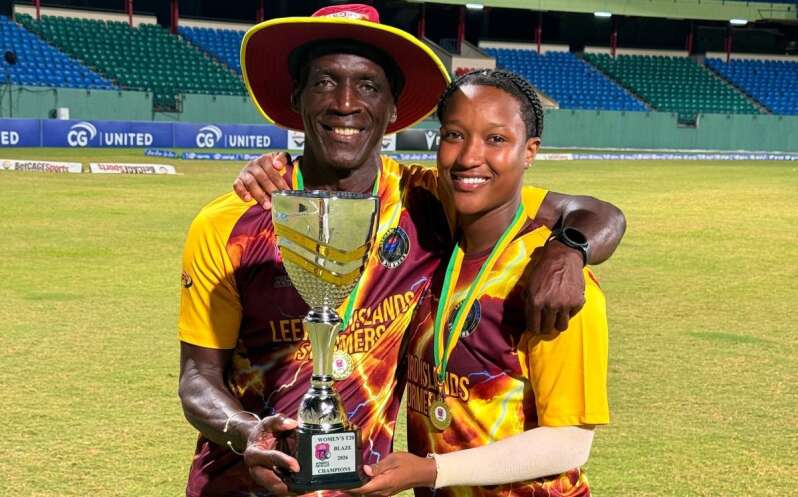
The Leeward Islands Stormers unbeaten run to the T20 title was no accident. According to Head Coach Percy Daniel, the championship performance was the result of belief, preparation, and a clear understanding of roles—qualities that propelled the team to the top of regional women’s cricket for its first time.
Daniel said he was not surprised by the team’s success in the T20 competition, explaining that the coaching staff always believed the squad had the talent to win. “We knew we were capable,” he said. “When we looked at the team’s woman-to-woman, player-to-player, we believed we were a notch above. The key was getting the players to believe it and execute.”
That belief translated into flawless execution, as the Leeward Islands completed the tournament unbeaten. Daniel credited much of the success to improved leadership, particularly from captain Amanda Edwards. He described her captaincy as “exemplary,” noting her calm decision-making, timely bowling changes, and improved game awareness. “In the past, when we needed her to stand up and lead, she sometimes buckled. This time, she was on point throughout the tournament,” he said.
Individual performances also stood out. Daniel praised Shawnisha Hector, highlighting the tremendous impact of her stint in Australia on her development. He emphasized that her ability has never been in question, describing her as one of the most powerful hitters in regional women’s cricket. “Her issue has never been skill—it’s mental. Once she understands her role and stays at the crease, she is devastating,” Daniel added, expressing confidence that Hector is a strong candidate for West Indies World Cup selection.

The inclusion of wicketkeeper Reniece Boyce proved vital to the team’s balance. Daniel explained that she was intentionally assigned the role of stabilizer in the batting order, especially given the aggressive nature of openers like Qiana Joseph. Her presence provided much-needed structure at the top of the innings.
Addressing public concerns about Tonya Martin’s limited role, Daniel clarified that injury management was the primary factor. Martin, whom he described as a naturally gifted athlete, was carrying an ankle injury that required careful monitoring.
“We had to protect her, especially with both T20 and 50-over formats being played,” he explained.
While the T20 campaign ended in glory, the Super 50 tournament told a very different story. Daniel described the team’s performance as a “total mental meltdown,” noting a sharp decline in confidence, body language, and engagement. Despite expectations that momentum from the T20 success would carry over, the team failed to perform. “It wasn’t physical—it was mental. Something happened, and the players themselves would have to explain what it was,” he said.
Daniel was particularly candid on the issue of fitness, stressing that it is largely a personal responsibility. With cricket not played year-round, players must maintain conditioning during the off-season. “You can’t come back next year in the same condition and expect different results,” he stated, adding that players are paid and must act as professionals if they hope to progress to West Indies selection.
Above all, Daniel emphasized the importance of mindset in modern cricket. He strongly advocated for mental skills training and sports psychology, noting that many talented players struggle not with ability but with decision-making, discipline, and handling authority. “Mindset is key,” he said. “If we are serious about development, we must focus on the mental side just as much as the physical.”
As discussions continue about formally honouring the T20 champions, Daniel remains proud of the team’s achievement. Despite the disappointment in the Super 50, he believes the Leeward Islands Women’s team has set a benchmark—and with the right mental approach, the future remains bright.