


In an extract from his searingly honest and insightful autobiography, the Irish Olympian recalls the aftermath of winning European indoor 400m gold in 2005.
Sport can be so fickle, with fractions of a second separating screaming success from abject failure. The difference in how they’re received is stark. Win a medal and, suddenly,
the media are all over you. Fall short and it’s a lonely, anonymous walk off into the night. That Sunday morning in Madrid, I was suddenly in high demand, my first appointment being to meet one of the Irish photographers who took me to a spot in the city to pose with the gold. While waiting in the hotel lobby, people from various nations came over to offer their congratulations. Then there was the buzz of flying home. That was the most surreal part. I had flown to Madrid as a complete unknown to most in Ireland. But the win made national headlines.
When our plane landed in Dublin, I was ushered to the front and asked to wait for several minutes before they opened the doors. As they did, I saw a horde of people waiting and a guy playing bagpipes. It was just me up there, following Mr Bagpipes as we walked through the airport, with heads turning all around and me cringing with embarrassment. I went to pick up my bag and was told not to worry about it, and at the arrivals hall there was another crowd gathered, with many clubmates, friends and relatives. One of my mates had a big placard: Gillick, will you marry me?
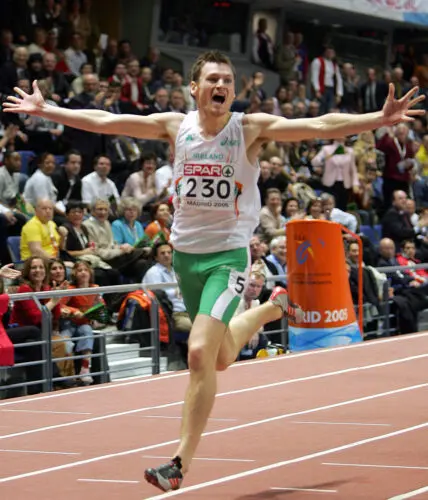
In the weeks after, I heard countless stories about the thrill that race had given people. Friends of friends would tell me how they were on their feet, roaring at the TV. That was always what I’d do when watching Irish athletes or teams. It was strange, surreal, to hear others say they had done it for me.
At home, our landline was inundated with calls, my mum sifting through the messages. Letters were dropped into the house, with various people in the area offering congrats.
But when I took a step back, and had a few moments to contemplate, there was a question awaiting: what do I do now?
I arrived back on a Monday and went to a reception in the local pub that night. But on Tuesday morning at 9 a.m., I was back in a lecture at the Dublin Institute of Technology. That was exactly how I wanted it – for normal life to resume as fast as possible. But that was easier said than done. I hopped on the tram to head to the city centre but, immediately, I could sense that something had changed. People were looking at me, noticing me. I sat beside a guy who was reading a newspaper, and in the corner of my eye I saw that he was reading a story about me. A while later, he looked up, then across.
‘Are you ….’
‘Yeah,’ I said awkwardly.
‘Ah, Jesus! Fair play to ya.’

At college, one of our lecturers announced my win to the class, though most of them already knew about it. For days, weeks, months, there were reminders that things were now different – not in terms of how I felt or acted, but in how others perceived me.
Three days after arriving home, for example, my mates and I went on a night out to Copper Face Jacks, Dublin’s most famous nightclub. As we stood in the queue, one of the bouncers recognised me and gave me a nod, ushering us all up to the front and giving us VIP access.
I had a girlfriend at the time, so I wasn’t going out looking to meet anyone, but I could sense the increased attention. People would come up to chat throughout the night or look over from afar, wondering why others were doing that. Who’s your man? I’d walk around Dundrum
Shopping Centre and notice heads turning, with whispers between friends. It made me uncomfortable. Before I’d leave the house, I started to worry about what I was wearing,
how I presented myself. I was only 21, an immature student, and while part of me wanted to go on nights out, to be the guy having my ego stroked, a much bigger part just wanted anonymity, normality.
The gold medal, as great as it was, also affected my relationship. After Madrid, I started putting more of a priority on athletics. Before I wanted to perform, but now I needed to. The training began to absorb so much time and energy that there were many weeks where I didn’t see enough of my girlfriend, which created conflict. We came from different backgrounds – I was embedded in sport, she wasn’t – and it was hard to have understanding and empathy for the other’s view.
“Why won’t you go out on Saturday?”
“Because I’ve got 6x300m on Sunday morning.”
The victory in Madrid heightened the need to be professional, to prioritise athletics over everything – even those close to me. My girlfriend and I broke up later that year and while the change in attitude after the gold wasn’t the only reason, it was definitely among them.
For some people, fame is a goal, a dream, but for me the novelty of it quickly wore off. It felt exhausting. One day I was sitting at home, hungry, and thinking about going to the shop to get a roll. But I stopped myself. Why? I had a fear of bumping into someone who’d ask me about athletics. It seems stupid, a real first-world problem, but it had become a constant occurrence and started to wear on me. I just wanted things to be normal. But they weren’t.

When I got back training, there was an influx of new athletes in the group. People were saying, “This is great, they’re all here because of you!” Meanwhile, I thought: “What
about me? I still have a season to do. Why are things changing?”. There was a weight that came with being well known, one that felt like a burden. I was dreading the outdoor season. Suddenly there was pressure, expectation. This wasn’t just a hobby any more.
My neighbour came in one day and while she meant well, she voiced what many thought: “We knew you were good, but we didn’t think you were that good.” I had come from
nowhere to win a European title and sometimes people assumed I was loaded as a result, that people were knocking on the door to give me cheques. The reality was so different.
I didn’t have a shoe or kit sponsor and had bought the spikes I wore in Madrid myself. The only funding I had was the €4600 grant and there was zero prize money for winning
the Europeans. I soon realised money wasn’t going to fall out of a tree, with the value of athletes so far below that of team sports.
Madrid had been something I never expected. But when I came home and things settled down and I had time to think, my old insecurities reared their ugly heads. The imposter syndrome got stronger.
Did I just get lucky? Did the stars align because everyone else ran s**t on the day?
That golden moment had been magical, as were the celebrations with friends, family, team-mates and fans. But when I thought back on the build-up to that final, the only time I felt calm was when I started my warm-up. Every moment before, I was hating life, just wanting it to be over.
I needed to do something about that because I couldn’t face that at every championship, having panic attacks and feeling nothing but dread before the gun fired. You might think a big win would instil confidence, banish some doubts. But for me it just added to them. I struggled more in the aftermath of Madrid because, suddenly, people had an interest.
“When are you racing again? Are you gonna go to the Olympics? Will you win gold?”
Before, no one really cared, but now I could feel the eyes, the attention.
Nothing changed in my routine, but people’s expectations of me did. Suddenly, a lot of people wanted me to do stuff for free. It’s not a bad thing, turning up at events, presenting
medals or saying a few words, and it’s only right to give something back to the sport. But Mum is a nice person and, at times, she was too nice. She’d come home and be like: “David, there’s this woman I know who’s a teacher and they’d love you to go down to the school and give a talk.”
It was hard to say no, especially given the requests often came from people I knew. But it meant I got dragged left, right and centre, with training sessions also becoming a social engagement where I’d be asked to show off the medal.
Two weeks ago, no one gave a s**t and I could train in peace.
I’d try to oblige people because that’s the kind of person I am, a people pleaser, but elite athletics requires a level of selfishness and it’s hard – very hard – to know where to
draw the line. But if you don’t, you become very busy doing things that aren’t necessarily helping your career or rewarding you financially, solely out of fear of saying no.
You’re damned if you do, damned if you don’t.
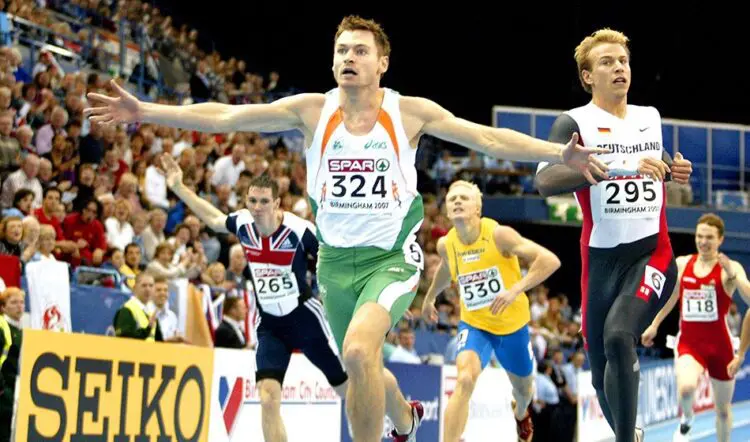
Going to Madrid, I’d lacked self-confidence in believing I could win a medal but when it happened, I was dazed. I heard what everyone was saying and I began to internalise it.
You’re going to make a world final. You’ll win an Olympic medal.
These things, which hadn’t been in my head before, moved front and centre. When a month or two passed without any sponsorship offers, it was clear a European indoor title was not enough to earn a solid living from the sport. Not even close. I thought of that quote from Nelson Mandela: “After climbing a great hill, one only finds that there are many more hills to climb.” The outdoor track season was looming, ominously, on the horizon, and I hadn’t even paused to enjoy my achievement. All I could think of, and obsess about, was what came next. S**t, now I’ve got to back this up.
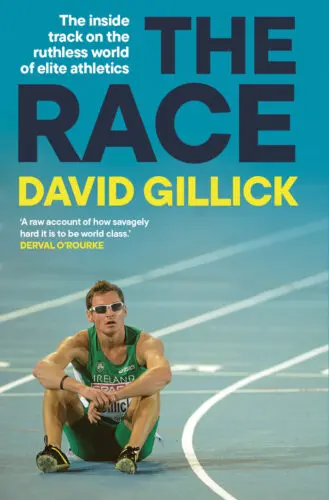
The Race: The inside track on the ruthless world of elite athletics, published by Gill Books, is out now


