


IT all started with a cheeky question at a press conference.
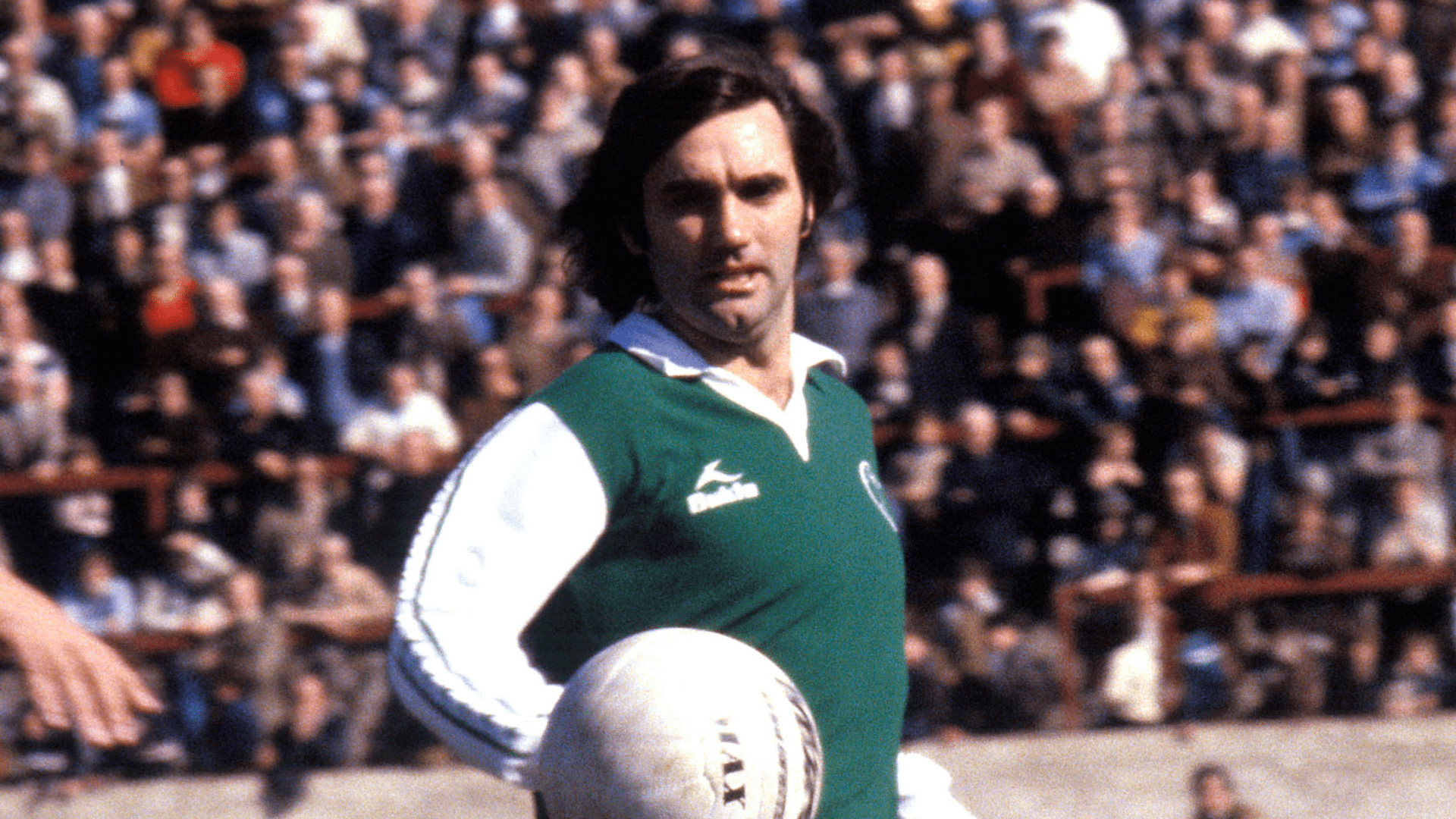
And it ended with George Best becoming the best-paid player in British football — for Hibs.
The Easter Road side were toiling at the bottom of the Premier Division when their commercial consultant Bill McMurdo had a conversation with Hibs chairman Tom Hart.
He told him that his client Best — then playing for San Jose Earthquakes in the USA — would be coming back to play in Ipswich Town boss Bobby Robson’s testimonial.
McMurdo told SunSport: “Tom wanted some publicity for a lottery that Hibs had just started.
“I said I’d get George to come and present the £1,000 cheque to the lucky winner at half-time during a game against Kilmarnock.
“The cameras were zoomed in on Bestie as he presented the cheque, then he raced away to get his flight down to London.
“After the game some of the press guys got hold of Tom and asked him if George would be signing for Hibs.
“Tom said, ‘No, he’s just presenting the cheque for us,’ and the reporter said, ‘Is that because you couldn’t afford him?’.
“Tom wasn’t having any of it and replied, ‘You listen to me. He WILL be joining us — and I’ll pay his wages personally’.
“Along with Cecil Graham, the club’s secretary, Tom went down to Ipswich for Bobby’s benefit game and we met up.
“They agreed they would sign George and pay him £2,500 a game.
“At the time, he was the highest-paid player in the UK, bar none. I had players at Celtic and Rangers at the time — top-notchers — on around £400-a-week.
“In those days, clubs split gate receipts and we were on a share of the gate as well, because I knew George would bring in the crowds.”
So it proved. Best’s debut for Hibs was against St Mirren at Love Street in November 1979.
A crowd of 13,670 — more than double what would usually have been expected — saw him score a left-foot finish as they went down 2-1.
McMurdo added: “In his first home game at Easter Road, against Partick Thistle, there were over 20,000 there.
“In their previous home game — the one against Kilmarnock when he presented the cheque — there had been just 5,000!
“Tom Hart always said George wouldn’t cost him a penny, despite the wage he was on.
“And he was right. As well as the gate revenue, his name sold a lot of the club’s merchandise.”
In all, Best made 22 appearances for Hibs — including six games the following season after their relegation to the old First Division.
McMurdo said: “He absolutely loved being there.
“Hibs had players like Jackie McNamara and Tony Higgins at the time. They were a great bunch and George fitted right in.
“I think a few of them thought he’d be a billy-big-time type, but Bestie wasn’t like that at all.
“He had a flat in Panmure Place, and although he was up and down to London, he felt really at home in Edinburgh and did well for them.
“At the time, George was an alcoholic and that caused issues.
“There were a few bad times, I’ve got to admit. He missed a Sunday Cup game against Ayr.
“The day before it, the French rugby team had played Scotland at Murrayfield and he went out and got p***** with them.
“But my view is that he did a lot for the profile of Scottish football and never let anyone down.
“For every bad time, I had 100 good times with him. He was a great guy to be around.
George Best’s sensational career
Manchester United Debut & Rise: Discovered in Belfast and brought to Manchester United, Best made his debut in 1963. He quickly became a superstar, dazzling fans with his exceptional dribbling skills, speed, and balance, leading United’s attack alongside Bobby Charlton and Denis Law (The Holy Trinity).
European Cup Glory (1968): His pinnacle club achievement came in 1968 when he helped Manchester United become the first English club to win the European Cup, scoring in the final against Benfica.
Ballon d’Or Winner (1968): Following the European Cup victory, Best was awarded the prestigious Ballon d’Or (European Footballer of the Year) and the FWA Footballer of the Year, solidifying his status as the best player in the world.
“The Fifth Beatle” Celebrity: He was as famous for his off-field celebrity as his on-field genius. His pop-star looks and flamboyant lifestyle earned him the nickname “El Beatle” and made him one of the first truly global football celebrities.
Early Decline and Retirement: Despite his extraordinary talent, his top-level career was relatively short. Plagued by disciplinary issues and alcoholism, he abruptly quit Manchester United in 1974 at the age of 27, leading to a nomadic later career in lower leagues and the NASL.
“Speak to any of the Hibs guys who were there and they have nothing but praise for George as a person.
“My daughter Fiona and his son Calum are a few weeks apart in age and they are still in contact with one another.
“A little-known fact is that Jock Wallace wanted to sign him for Rangers at the time.
“He was a client of mine and he asked me if George would come.
“I told him he’d sign without a doubt and we did the deal.
“But Jack Gillespie, who was the financial man on the Ibrox board, pulled the plug on it. George ended up going back to San Jose and then signed for Bournemouth.
“Yet we travelled all over the world to play and everywhere he went he drew amazing crowds.
“Even people who had no interest in football wanted to see George.”
Best scored in the final moments at Love Street 46 years ago, after Buddies striker Doug Somner had netted twice to seal the points.
Manchester United and Northern Ireland legend Best sadly died in 2005, aged 59.
November 24, 1979, St Mirren 2-1 Hibs
ST MIRREN: Thomson, Young, Fulton, Copland, Munro, Richardson, Stark, Abercromby, Bone, Somner, McDougall.
HIBERNIAN: McDonald, Brazil, Rae, Paterson, Duncan, Callachan, McNamara, MacLeod, Ward (Hutchinson), Higgins (McGlinchey), Best.
Keep up to date with ALL the latest news and transfers at the Scottish Sun football page