



The former sprinter talks about coming back from the brink after the crash that almost cost him life, his struggles with trying to reach the top level again and why he has found peace after a quiet retirement from athletics.
“So, what are the goals?” asks the doctor, while an alarmingly emaciated James Ellington sits in a wheelchair pushed by his then coach Linford Christie.
“To be back on track next year,” replies Ellington instantly. Emotionless, not missing a beat. “What do you mean by back on track?” responds the confused consultant.
“Full training. Competing,” says Ellington, prompting an interminable pause as the audacity of his statement hangs in the air.
Eventually, so quietly that he has to repeat himself to be heard, Christie breaks the silence to gently offer a more realistic ambition for Ellington’s future: “Just to be able to walk around unsupported.”
The clip has sat at the top of Ellington’s Instagram page for close to seven years now, offering a permanent reminder of the athlete who never knew when he was defeated, even when his career looked over and his life had so recently been in peril. A man of unrivalled dedication, who would not bow to convention or accept others’ limitations. A man who refused to give up. Until, one day, he did.
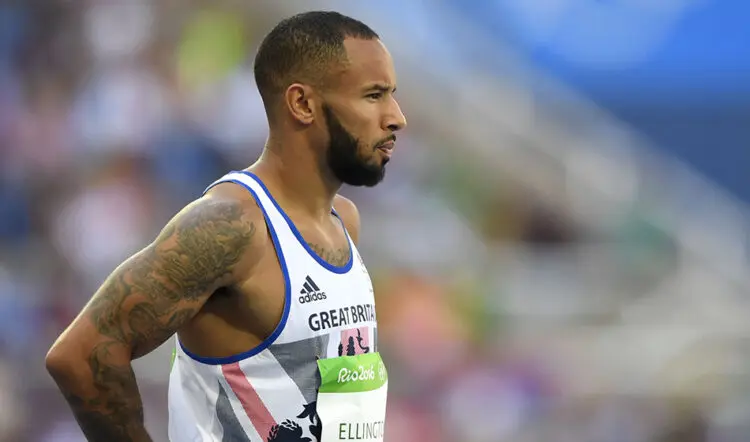
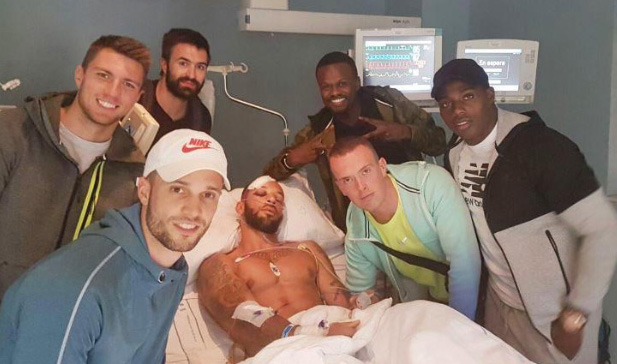
I last sat down for a proper interview with Ellington when I visited his west London home in the spring of 2021. Four years had passed since the day that changed everything, when the motorcycle he was riding with fellow British sprinter Nigel Levine at a training camp in Tenerife collided with an oncoming car.
Ellington’s injuries were so extensive – a compound fracture of the right leg, a fractured left ankle, a fractured eye socket, a displaced and fractured pelvis, the loss of six pints of blood – that he was lucky to be alive.
But when medical professionals told him he would never even jog again without a limp, Ellington ignored them, proving his determination by routinely tumbling out of the wheelchair he was confined to for six weeks and crawling to do press-ups on the floor.
“The worst thing you can do is doubt me,” he told me, days ahead of the comeback 100m race that would see him clock a wind-assisted 10.40 alongside amateur runners at Dagenham’s Jim Peters Stadium.
His mission at that point – one that had fuelled every painful step of his recovery – was to become a triple Olympian in Tokyo that summer. When I questioned whether he might ever be content without achieving such an unfathomably lofty ambition, he considered silently for 12 seconds before finally delivering his one-word answer: “No.”
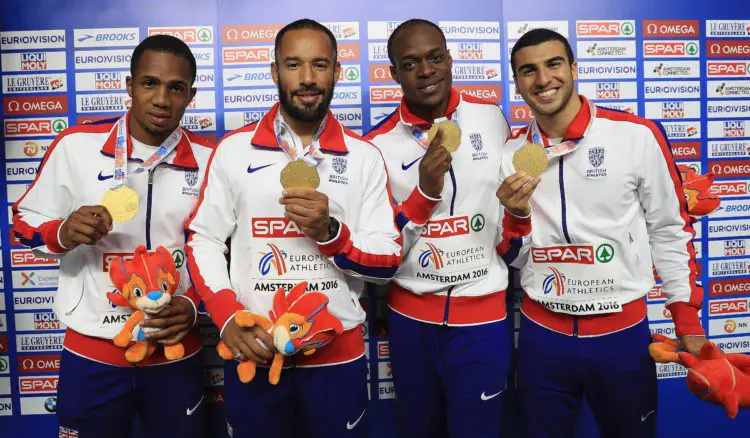
Ellington’s quiet retirement from athletics two years later did not generate headlines. Even British Athletics failed to mention anything on their social media pages in tribute to a sprinting mainstay of countless international teams; that silence still rankles today. But, by that point, his plight had been largely forgotten. Ellington and the sport belatedly went their separate ways.
So, it is with great intrigue that I arrange another interview to find out two main things: What happened in those years since we last spoke? And, having not come close to adding to his multiple international vests post-accident, has he been able to find any contentment?
The truth – and he admits it took another two years to accept it – is he knew his cause was futile the moment he crossed the finishing line for his heat at the 2021 Olympic trials. He had placed fourth, clocking 11.00 in truly horrendous conditions with a -3.4m/sec headwind, exiting the competition straight away. The sole goal that had motivated him for years was over.
“It wasn’t even like I was upset,” says Ellington, 40. “It was a weird feeling. You know when boxers say that they know when it’s time to stop? Well, it was just gone.
“Physically I was alright but, flipping hell, when I crossed that line in whatever time I ran and I was all the way back there I just thought: ‘This is a joke’. And then straight away I tried to convince myself that I’d try again the next year. But, mentally, it just wasn’t there.”
Surely not. Is the same man who forced himself to train when his body was utterly broken suggesting he did not make it back to the international ranks because he lacked the mental desire?
“Yeah, exactly,” he continues. “Physically, I saw a lot of what I needed in training. I was training against people currently competing and doing what I needed. But as soon as I got on to a startline, in my heart and head, I wasn’t feeling it. I was doing it in training, but as soon as it came to competing it wasn’t there. The energy that it took to get to where I did was so much that the motivation was gone.
“Everyone on the line wanted to take my head off because my name is my name. But I wasn’t the same James because of the crash. Guys are pumped up to take me on and I couldn’t be arsed to run.
“Coming back from being at a high level to a not-so-high level, you can’t force that motivation. That was a big hurdle. By that time I was burned out. Psychologically and spiritually I was burned out.”
It is a fascinating admission, but one that took him years to accept. He returned to the British Championships the following summer, again exiting in the 100m heats, and intended to try for a third time in 2023, only to finally tap out following a National Athletics League meet a few weeks before. His best 100m time post-crash was 10.39.
“I was going through the motions in training but, when it came to competition, I just couldn’t wait to go home,” he says. “It was weird. It was like I was being pulled back and forth inside myself, trying to stick to the narrative of getting back, but the passion had gone.
“But I couldn’t step off the train because I’d said that I would get back to where I believed I could. I was fighting myself, really.”
Now, much later than doctors predicted almost a decade ago, he is officially a former athlete. Having taken a year off to adjust to life without the relentless athletics grind, he is now pursuing work as a public speaker and a speed coach to people competing in other sports. This summer also saw the birth of his son, 14 years after he became a father to his daughter from a previous relationship.
A much-delayed financial settlement from the crash was finally agreed out of court last year, with the Spanish motor insurers of Levine’s rented bike admitting liability for Ellington’s damages. He suggests the sum “definitely helped”, but that restrictive Spanish laws meant it was one of the lowest payouts anywhere worldwide. The claim was not against Levine, whose athletics career ended when he was banned for four years in 2018 after testing positive for clenbuterol.
“After the crash I was cool with him,” says Ellington, of Levine. “I didn’t have any hard feelings towards him. Shit happens. But then he did some silly things after the crash and it pissed me off because my name was getting dragged into it as I was in the crash with him. I’ve lost contact with him, but there were never any hard feelings to begin with.”
There are, in fact, few athletes Ellington does still speak to. He name checks double European 200m medallist Danny Talbot and says he remains friendly with most of the GB female sprinters from his era. But athletics and those within it are largely a past memory.
“Sometimes, when you leave a sport or something bad happens, you realise who your friends are,” says Ellington. “I was disappointed because I thought a few people in athletics were my actual friends outside, but I was wrong. When that crash happened, some people stepped up, and a lot of people who you expected to be there just disappeared into thin air.
“I watched a bit of the World Champs this summer, but I’m not really in the know. Someone will ask if I saw the athletics and I won’t have even known it was on. I’m just not really interested. Being out of that environment is nice.”
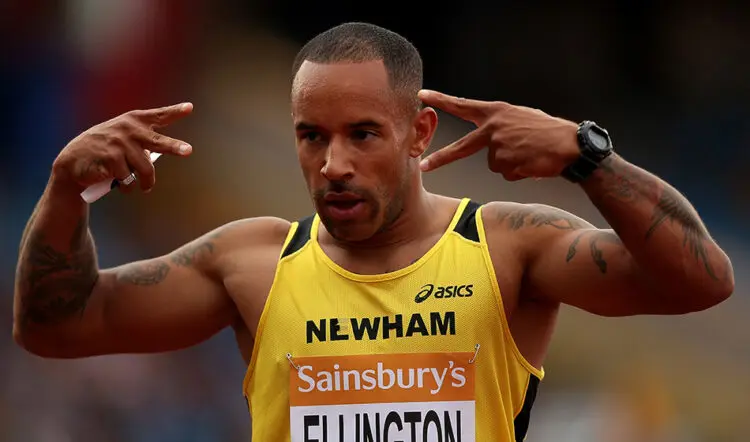
Leaving athletics has not dimmed a training obsession that sees him work out five days a week and regularly spar in the Brazilian martial art of jiu-jitsu. Training – pushing his perfectly sculpted body to ever greater heights – remains an addiction that he intends to keep forever.
“Training is my vice,” he says. “I like the results of feeling strong and fit. I think, with the mental side, if I didn’t train I’d go mad. It keeps me regulated, keeps my brain occupied and keeps me healthy.
“I need to lead by example. You get a lot of people out there not practising what they preach. It’s very important, in the [coaching] industry I’m in, I’m telling people how to do things, and I need to actually be the part that I’m talking about.”
Every so often an ache or pain will serve as a reminder of the trauma his body went through, but he says he is “lucky not to feel any residual issues” from the crash.
So, now we both know the outcome, I ask the same question that made him pause for so long during our last interview. Having doggedly defied medical expectation to not only run again but sprint fast enough to mix it with some of Britain’s best, is he content with all he achieved post-crash despite not realising the Olympic dream he had clung to?
“It’s a hard question to answer,” he replies. “Because I’m not on that journey now I can take myself out of it and see that I did well. In that sense, I did good. But, at the same time, because I like to put myself out there and achieve the things I set my mind on, I’m not content.
“When it ended, I can’t say I was super sad or disappointed. It was just the end of the road. I just accepted it. But I definitely look back with pride.
“I’ve got good people around me, I’m happy, my body is working and I’m in good shape – better shape than some athletes who are still competing. I’m definitely succeeding.”


