


When Adrianka Arvelo left Venezuela a decade ago, she had a university degree in translation — but nowhere to use it. Her country was spiraling into economic collapse.
“I left during the hunger crisis,” she recalled. Hyperinflation had wiped out salaries, food and medicines were scarce, and electricity failed for hours at a time.
So, she crossed into Colombia and arrived in the capital Bogotá with no clear plan. As she settled in, she saw more and more Venezuelans arriving — some after walking for days — selling pencils or candies on the streets to survive.
What happened next set Latin America apart from much of the world.
Instead of closing its borders, Colombia made a bold choice: to welcome Venezuelans, and to do it at scale. The government created the Permiso de Protección Temporal (PPT) — a Temporary Protection Permit granting Venezuelans 10 years of legal status, free of charge, even with expired passports. But that type of system which spread across the region is now under threat with nations facing a critical choice about the future of their migrants.
For Arvelo, it was life-changing. “It protected us,” she said. “It allowed us to look for a real, formal job.” Within five days of arriving, she was hired as an English teacher.
More than 2 million Venezuelans have received the same permit — one of the largest regularization efforts anywhere in the world.

For Ana Karina García, who heads the migrant-support organization Fundación Juntos Se Puede in Colombia, the secret to the program’s success was its simplicity.
“It was a solid permit that made integration possible without requiring a huge state apparatus,” she said. “With one ID card, people could work legally, rent apartments, enroll children in school and pay taxes.”
Colombia wasn’t offering housing or cash support. It just opened the labor market — and, remarkably, that was enough for many families to rebuild their lives.
Other countries in the region followed their own versions of this approach. Argentina and Uruguay used regional mobility agreements to fast-track Venezuelans into residency. Ecuador and Chile introduced special visa categories.
But perhaps the most ambitious effort emerged in Brazil.
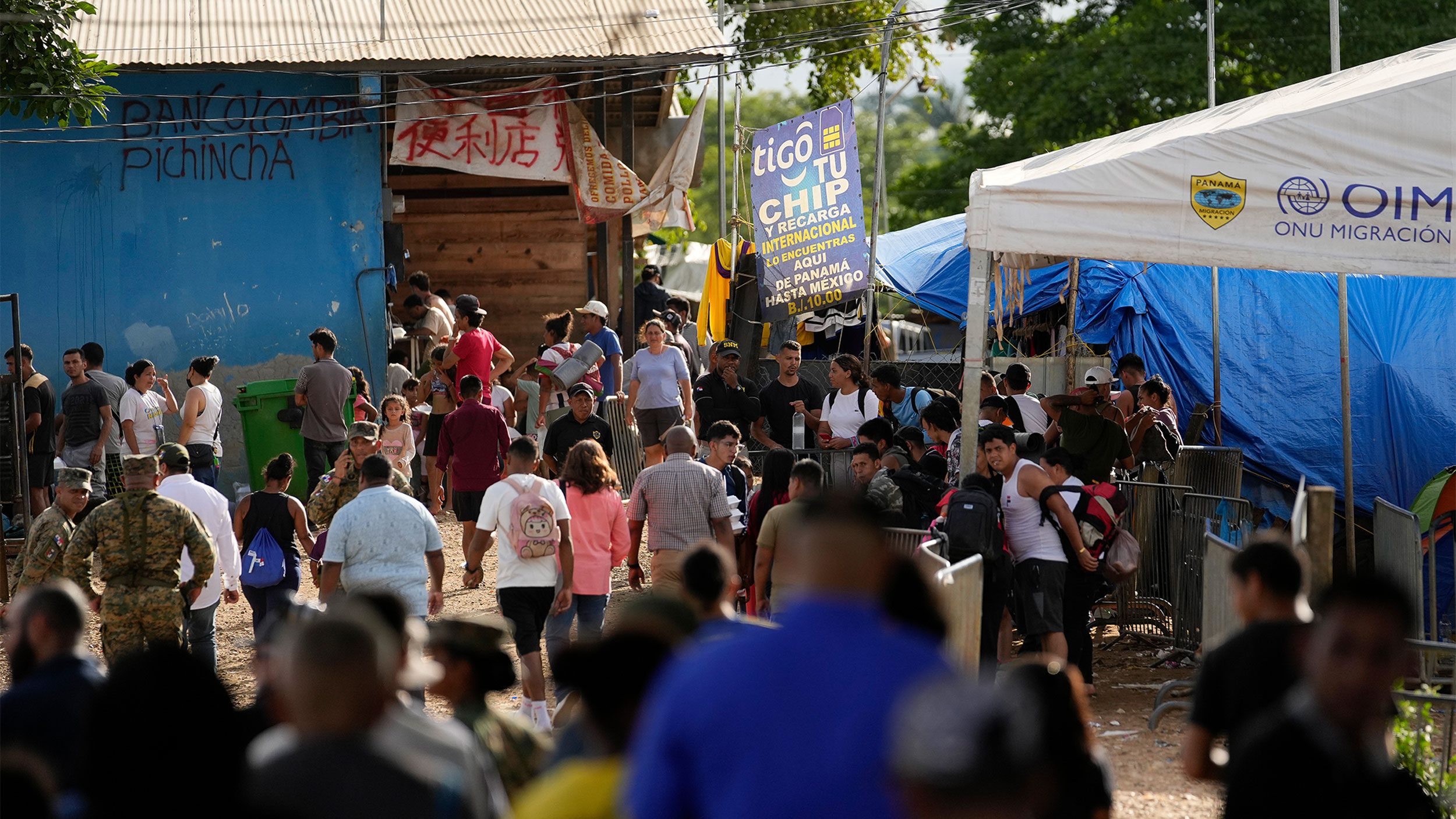
There, the federal government — with a large role for the military — launched Operação Acolhida, or Operation Welcome. It combined three major components: issuing documents and residency permits leading to permanent residency, providing large-scale shelters on the northern border and transporting migrants from the Amazon region to Brazilian cities where jobs were available.
Brazil’s response was unusual because it relied heavily on the military. That might raise concerns elsewhere, but in this case it helped the operation run smoothly, said João Carlos Jarochinski Silva, a professor at the Federal University of Roraima who studied the program for years.

The armed forces coordinated shelters, transportation and documentation in a remote area where civilian agencies lacked capacity — and their presence helped reduce the risk of backlash or violence against migrants.
Migration expert Andrew Selee of the Migration Policy Institute said Brazil understood something essential early on: “If you let people work legally, and you let kids go to school, they’ll take care of themselves.”
Research now shows that Venezuelans have helped boost labor markets across the region, especially where many arrivals were highly educated. Selee noted that this remains an untapped opportunity: Countries could accelerate the recognition of professional credentials and place teachers, doctors, engineers and other skilled workers in regions that desperately need them. “You have people with incredible skills driving Ubers,” he said. “If countries figured out how to recognize those credentials, it could be a huge win-win.”

Openness under pressure
The relative absence of xenophobia in Brazil also stands out. Jarochinski Silva explained several factors: The migration crisis was geographically concentrated in a remote border region, far from Brazil’s political and media centers, the government kept tight operational control through the armed forces and migrants were quickly dispersed across dozens of cities, preventing overcrowding in any one place.
And although more than 700,000 Venezuelans have arrived, they still represent a very small share of Brazil’s population — less than 1% — which helped limit political backlash.
By framing the situation as a humanitarian issue, the government also shaped public perception.
But in other countries, the picture soon shifted.
In Chile, Ecuador and Peru, slowing economies and rising crime fueled negative attitudes toward migrants — even though data shows Venezuelans commit fewer crimes than locals. Political candidates began linking public safety concerns to migration, and public support for open policies weakened.
Across the region, governments that once embraced Venezuelans have started pulling back. Budgets are tight, public services are strained and temporary permits are reaching their limits.
Even in Colombia — once the region’s most generous host — the registry for the 10-year protection permit is now closed. New arrivals, including Venezuelans returning from the United States after losing Temporary Protected Status or asylum cases, now have no way to regularize their stay.

García, of the migrant-support organization in Colombia, said her organization is seeing more of these cases.
“Venezuelans returning from the United States are now staying in Colombia with no possibility of regularizing their status,” she said. “Many cannot go back to Venezuela because of political persecution, medical needs or lack of opportunities.”
Without documents, they risk falling into unregulated work — or, in certain regions, even recruitment by criminal groups.
Migration expert Selee said this moment was inevitable. Temporary measures worked in the short term, but now governments must confront the question they delayed: how to turn temporary residents into permanent ones.
“The worst thing you can do is leave people in long-term temporary status,” he said. “It hurts migrants, and it hurts the economy.”
Venezuelan migrant Arvelo personally feels that uncertainty. After a decade in Colombia, she says the country still feels like home — but recent policy shifts worry her.
“Being an immigrant is always hard,” she said. “Colombia welcomed me. I just hope it continues.”
Latin America once showed that large-scale, humane integration wasn’t only possible — it could actually be effective.
Now, as politics tighten and resources shrink, the region faces a choice: whether those early experiments become the foundation of long-term policy, or a brief chapter in a much harder story.