



COLOMBO, Sri Lanka (AP):
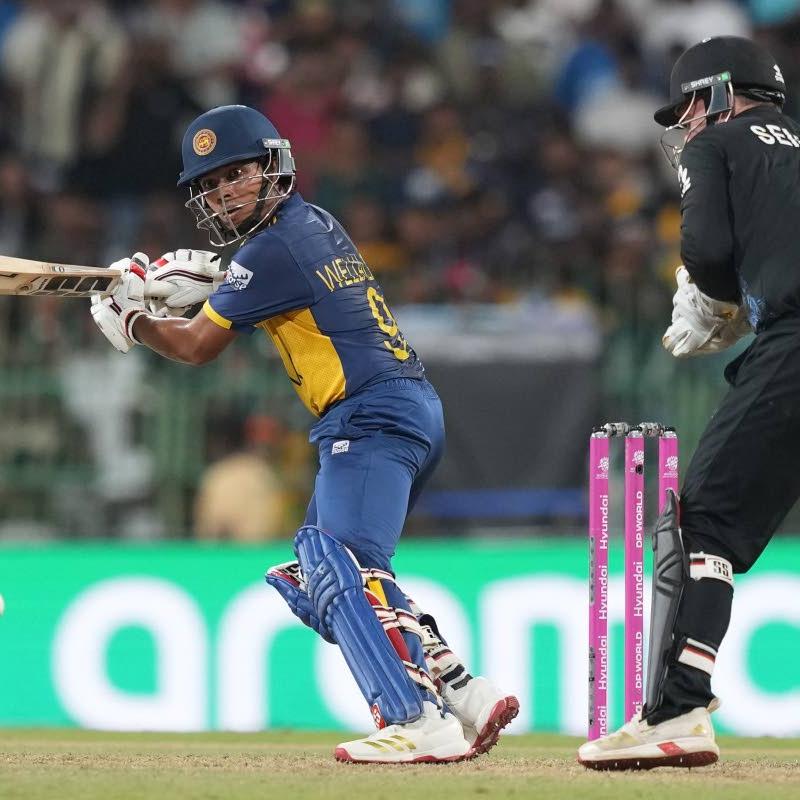
A counter-attacking 80-run partnership for the seventh wicket between captain Mitchell Santner and Cole McChonchie guided New Zealand to a 61-run win that knocked hosts Sri Lanka out of the Twenty20 World Cup yesterday.
Sri Lanka captain Dasun Shanaka won the toss and elected to bowl and New Zealand reached a competitive 168-7, thanks to Santner’s 47 runs off 26 deliveries and McConchie’s 31 off 23 which salvaged the innings.
Sri Lanka could only score 107-8 in reply.
The Sri Lankan bowlers had restricted New Zealand to 84-6, and had their opponents at 90-6 after 15 overs when the number-seven pair started counter-attacking. McChonchie scored 18 runs in the 17th over bowled by fast bowler Dushmantha Chameera and spinner Maheesh Theekshana conceded 21, including two wides, in the 18th.
When Santner was out on the last ball, the pair had added 80 off 43 deliveries.
Santner hit four sixes and two boundaries, while McChonchie hit two sixes and three boundaries.
Chameera and Theekshana took three wickets each.
New Zealand fast-bowler Matt Hendry bowled opener Pathum Nissanka with the first ball and Charith Asalanka, who had been recalled for the match, soon departed to leave Sri Lanka on 6-2.
Then the spinners tightened the screws by bowling slow through the air, and curtailing runs and taking wickets when the batters tried to attack.
Left-arm spinner Rachin Ravindra took a career-best 4-27, while Hendry took two wickets for three runs.
Kamindu Mendis top-scored for Sri Lanka with 31.
The game was a must-win for Sri Lanka to have any hope of reaching the semi-finals after losing to England in their Group 2 opener.
England are the only team already through to the semi-finals, after defeating Pakistan on Tuesday to make it two wins from two games in Group 2.
New Zealand now stand second with three points, after their match against Pakistan was abandoned because of rain and the two teams shared a point each.
Pakistan will have to win against Sri Lanka by a big margin to have any hope of advancing, because both England and New Zealand maintain high net run rates.