

The current planned legislation by the United Kingdom Government provides many pitfalls, not least as it provides a level of protection from prosecution through the Independent Commission on Information Retrieval (ICIR), where it states: “Information provided to the ICIR about a death within its remit and any evidence obtained directly or indirectly as a result of the information being provided to the ICIR —
“(a) is not admissible in legal proceedings (which has the meaning given in section 72(6)), and
“(b) may not be used by the Legacy Commission in connection with an investigation under Part 3 or inquisitorial proceedings.”
The result of this section is that information provided to the ICIR by terrorists cannot be provided by that body to convict those people of that crime, which they have admitted to the ICIR.
One of the greatest failures within legacy has been the lack of action by the government and authorities of the Republic of Ireland; these include not having in place appropriate measures to apprehend terrorists during The Troubles, matching United Kingdom Government Legacy measures, and a general lack of assistance for innocent victims.
We recall the early days of The Troubles, when two Irish government ministers were dismissed for alleged involvement in a plot to smuggle arms to the IRA, and in 1969 it is reported that some money from a government donation to a Citizens Defence Committee reached the IRA.
During The Troubles, many extradition applications for suspected terrorists from Northern Ireland and the United Kingdom to the Republic of Ireland authorities were rejected.
Many of these rejections were due to the Republic of Ireland’s Extradition Act 1965 being a significant barrier, due to a “political offence” exception that prevented extradition for offences considered political by that authority.
This significantly hampered law enforcement, and resulted in the United Kingdom Government being frustrated, which led to terrorists frequently using the Republic as a safe haven.
Of course, there has been a violent history in the Republic of Ireland against those who had any leanings towards the Unionist community; these took place both before and following the Partition of Ireland in the 1920s.
Such incidents included the Dunmanway killings, also known as the Bandon Valley killings; the Dunmanway murders, or the Dunmanway massacre, which refers to the killing (and in some cases, disappearances) of 14 males in and around Dunmanway, County Cork, and Bandon Valley, between April 26–28, 1922.
Also, intimidation and violence against many from a Unionist perspective resulted in families being forced from their homes to find safe haven in Northern Ireland, or some travelling to Great Britain.
From the start of dealing with Legacy matters, the Republic of Ireland government has taken a demand and inaction approach, demanding of the United Kingdom authorities what they should be doing, and seeking the greatest level of openness and scrutiny, while showing inaction themselves as they fail to provide the same level of transparency and scrutiny.
I recall many years ago when the groups battling to get information in relation to the Kingsmill murders committed to providing significant information; however, when the information was released, there was little new in it, and most was already in the public domain.
There have been serious allegations over the years of some Garda members cooperating with and supporting the IRA.
There is deep concern that these allegations have not been properly investigated by the Republic authorities.
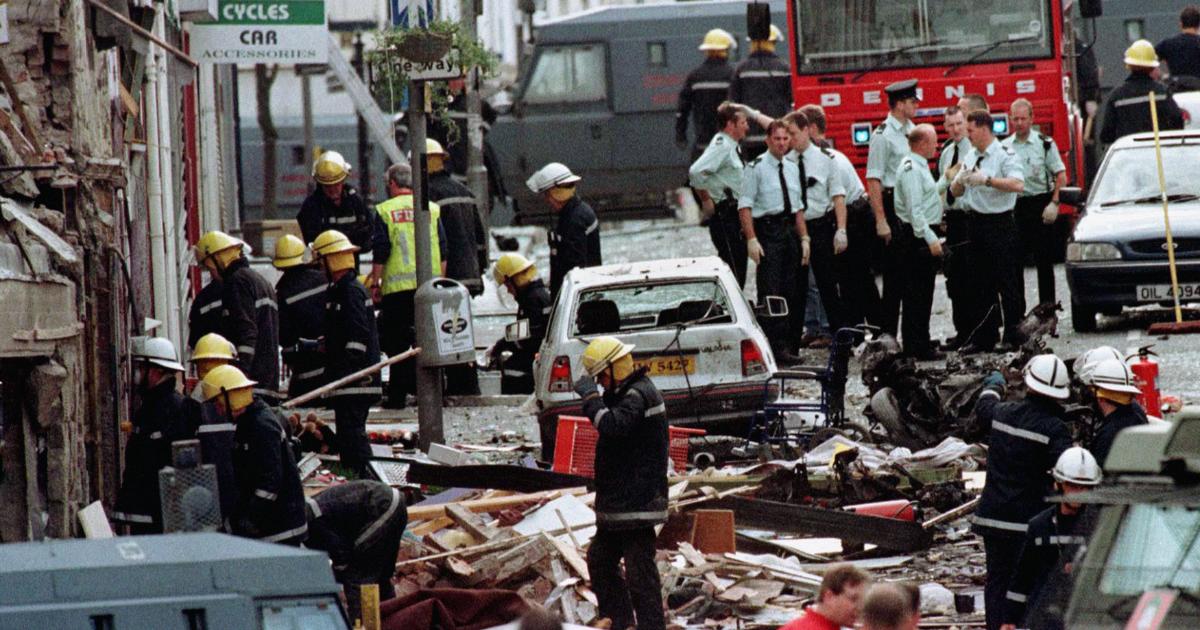
More recently, there have been accusations in relation to the Omagh Bomb inquiry that it is not getting sufficient support from the Irish government, despite official assurances of cooperation.
One of the most critical elements is that the Irish government has failed to establish a parallel public inquiry, which is a source of deep disappointment for victims’ families.
Concerns have been raised that a memorandum of understanding for cooperation is insufficient, particularly regarding the Republic’s government’s right to redact documents, and that this lack of full commitment hinders the inquiry’s ability to get crucial, unvarnished truth about the bombing.
Now, as we move into the new Legacy plans, there are significant questions over the input of the Republic’s government and authorities.
I have significant issues with that government’s failure to set up similar mechanisms as we have in Northern Ireland, but instead watch and often criticise the United Kingdom Government’s actions and approach.
Such methods will not bring about the outcomes we all desire in regards to Legacy.
There has been a complete failure of both governments to go after those who directed terrorism.
It is right and proper to hold those who fired the bullets or planted the bombs to account, but we believe it needs to go further; we need to track down those who sent these terrorists out to maim and murder.
That forensic piece of work should not hide from putting names in the public domain and using the full force of the law if they are alive or, in the case they are dead, to ensure their part in directing terrorism is well documented.
The Republic’s government could play a significant role in such a process.
Having announced the new Legacy plans, the Secretary of State has allowed himself to be led by the Irish government, without them carrying out parallel processes and with little accountability.
Sadly, the Republic’s government and authorities will have little accountability unless the United Kingdom Government stands up to them and has non-negotiable requirements that the people and particularly the victims in Northern Ireland and beyond deserve.
The Republic of Ireland government and authorities must be held to account for their actions, and indeed inactions, and their part in The Troubles.
Lord Elliott of Ballinamallard is a former Ulster Unionist MLA, MP for Fermanagh and South Tyrone and leader of the party.