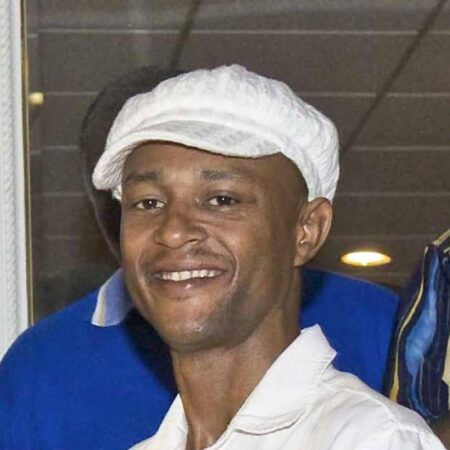


During his prime in the mid-1970s, Patrick Roxburgh was a dominant force for St Jago High School, setting records in the 800 metres and winning the 1500 at Champs, the ISSA GraceKennedy Boys and Girls’ Athletics Championships.
In his first year in Class One, he won the 1500m in 4:09.00, and erased the 800m Champs record in 1976, his final year running at Champs.
Decades later, the former middle-distance star serves his alma mater, ensuring the next generation of ‘Monks’ has the guidance he once received at the co-ed institution on Monk Street in Spanish Town, St Catherine.
Roxburgh is paying it forward as a teacher and dedicated coach, transforming raw talent into championship gold with skills he acquired through opportunities that stemmed from his excellence at high school, under the guidance of John Leiba, a past student “who had a vision for my development”. Leiba also represented St Jago at Champs.
His journey took him from the track at St Jago to the Jamaica School of Agriculture, and eventually to Cuba on a scholarship to study physical education. It was in Cuba that he mastered a variety of disciplines, including pole vaulting, which he has now brought back to the fields of St Jago.
“While I was in Cuba for two years, I participated in the physical sport coaching programme and learned to coach sprints and middle distances,” recalls Roxburgh.
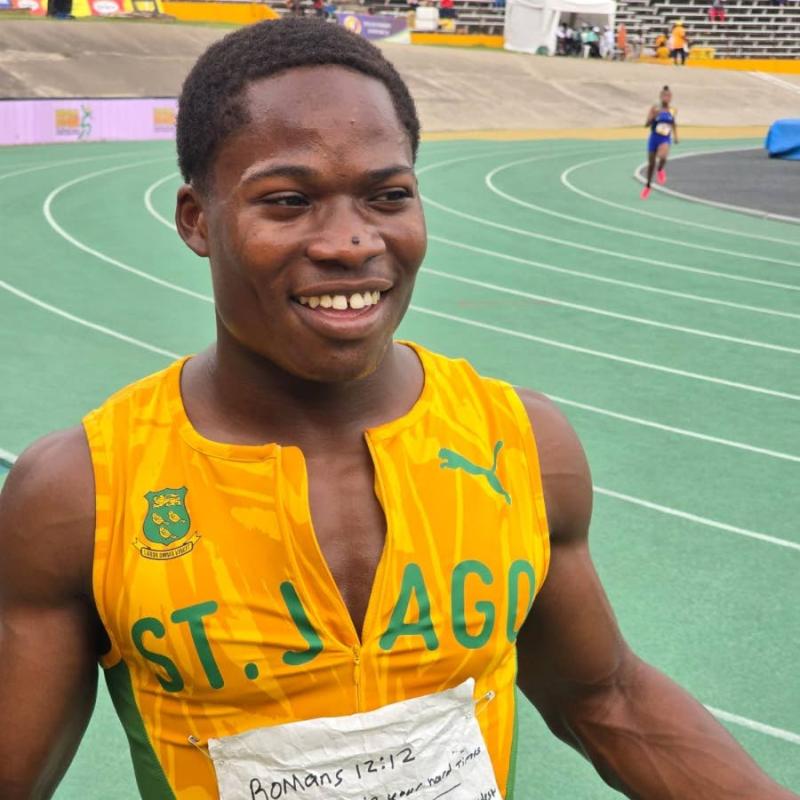
His return to the school in 1980 marked the beginning of a legacy of mentorship that continues to bear fruit, and the crown jewel of his current coaching efforts is Tray Barrett, also known as ‘Tray Bird’, a student-athlete who recently won the gold medal in the boys’ Open pole vault at Champs with a 3.90-metre clearance.
Roxburgh started coaching Barrett three years ago, when the athlete was a beginner in vaulting. At that point, the athlete could only clear 1.50 metres.
“He has made his family and school proud as the new pole vault champion. Tray is the type of person every coach wants to coach,” shared Roxburgh. “He started with no knowledge of pole vaulting, and I took him from basic steps to being a championship medallist. He makes it a pleasure because he never gives up and is always willing to put in the extra hard work to get the job done properly.”
Before pole vaulting, Barrett was a 100 and 200m sprinter who has personal bests of 10.49 and 22.06, respectively. He took up track and field at Spanish Town Primary School through the influence of the school’s coach, who told him he “looked like he could run fast”.
“It is not normal to find that combination, but it is a blessing because pole vaulting requires speed and aggression,” analysed Roxburgh.
CLAIMING STATUS
“His sprinting exercises have helped him sprint better to the vault. He has gone from an average sprinter to perhaps St Jago’s fastest man, running a 10.4 last year. He is a gutsy individual who wants to claim his status as an athlete of worth.”
This season, Barrett had to adjust his training technique a week before Champs.
“My pole broke during training only a week before competition, so I had to adjust to a next pole. I had to change up the run-up because the pole was heavier and it would jam in the vault box. I had to learn those things and adjust in a short time,” said Barrett.
He had additional motivation for winning the pole vault. He runs the opening leg on the Class One 4x100m, but picked that start.
“I just did it for my coach, teammates, and godparents. After the disappointment of false-starting in the 4x100m, which is hard because it’s for everybody, not just yourself, to come back and win, this makes me feel happy,” shared Barrett.
The athlete’s victory means much to Roxburgh. However, the coach sees himself as a holistic mentor, emphasising that education is the ultimate finish line.
“It was true then and is true now; without academic subjects it is almost impossible to get a scholarship. You must have the educational background to integrate into established systems and for life after athletics,” he admitted. “You won’t be an athlete forever, and without education, you will suffer once you exit.
“It is very important to get educational standards up so we can take advantage of opportunities.”
The coach/mentor stays in constant contact with his athletes off the track, ensuring that homework and SBAs are completed with the same discipline as a workout, frequently reminding that athletic careers are as fleeting as a sprint, or vault.